By Shazil Farhan, Founder – Sky Build Mart
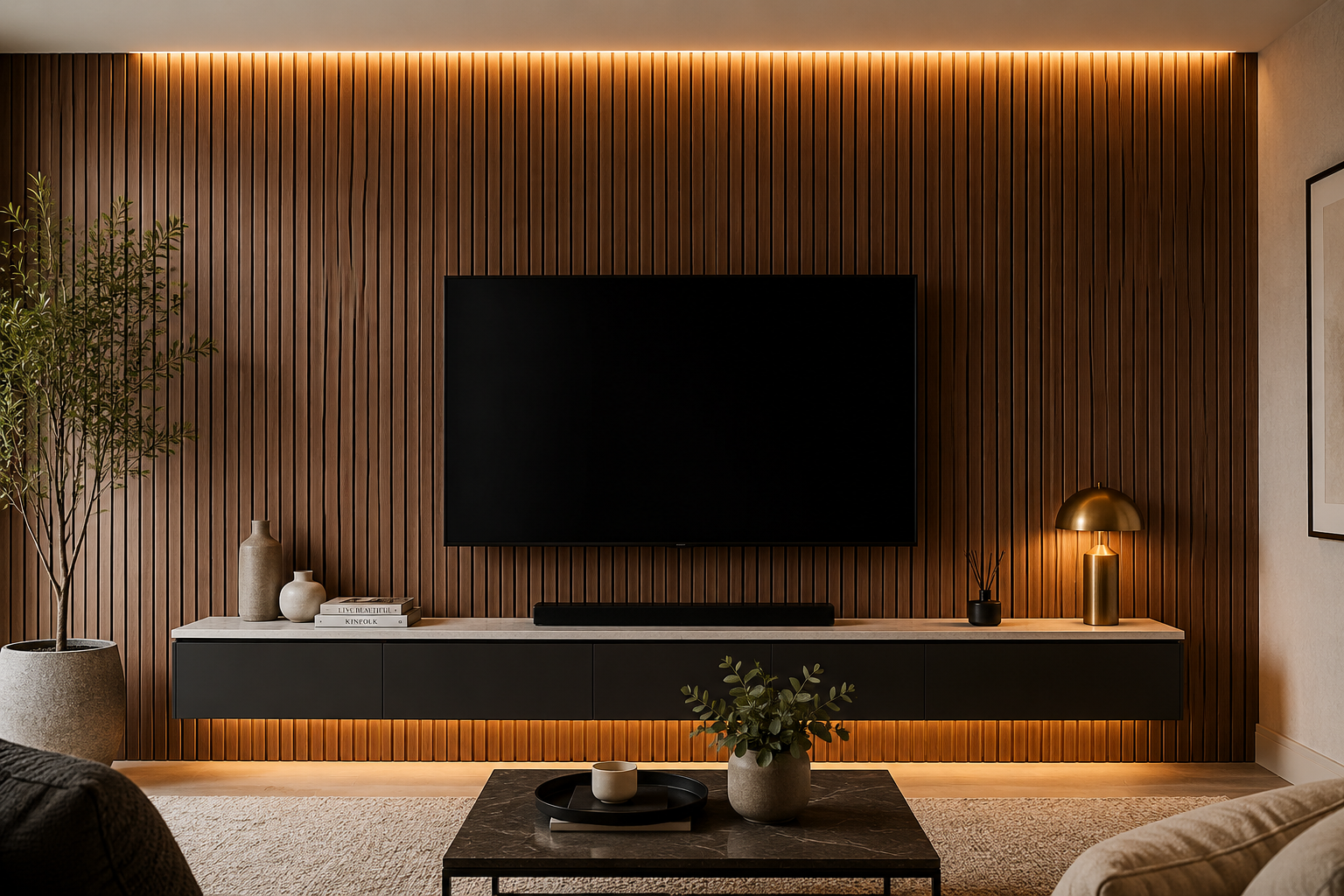
If you have spent any time browsing interior design content recently, you will have noticed that slatted wood-effect walls are everywhere. Feature walls in living rooms, textured backdrops in offices, warm-toned panels in restaurants and hotel lobbies. The look has taken over, and for good reason. But not all of those walls are made from solid timber. The majority use WPC wall panels, a material that has quietly become the preferred choice for architects, interior designers, and homeowners who want the beauty of wood without the drawbacks.
At Sky Build Mart, we stock the complete Sky Panels WPC wall panel range, one of the most comprehensive collections available in Pakistan, with 16 distinct finishes across two thickness profiles. Sky Panels is our in-house brand dedicated to premium decorative wall panels, and the WPC wall panel line sits at the heart of that range.
I put this guide together because the questions we get most often are not about which colour to choose. They are more fundamental: what exactly is WPC, is it actually durable, how does it compare to solid wood or MDF, and which thickness is right for my project?
This article answers all of that. By the end, you will know exactly what to look for, what to avoid, and how to get the most out of your wall panels whether you are doing a single bedroom feature wall or a full commercial fit-out.
Table of Contents
- What Is WPC? Understanding the Material
- Why WPC Wall Panels Have Replaced Solid Wood in Modern Interiors
- Sky Panels: The Brand Behind the Range
- 17mm vs 24mm Thickness: Which One Do You Need?
- How to Choose the Right Finish for Your Space
- The Sky Panels WPC Wall Panel Collection: Every Finish Reviewed
- Room-by-Room Application Guide
- Installation Overview: What to Expect
- Caring for Your WPC Wall Panels
- Common Mistakes to Avoid When Buying WPC Wall Panels
- Frequently Asked Questions
- Conclusion
1. What Is WPC? Understanding the Material
WPC stands for Wood Plastic Composite. It is an engineered material made by combining wood fibres or wood flour with thermoplastic polymers, typically PVC, polyethylene, or polypropylene, along with additives that improve UV stability, fire resistance, and colourfastness. The result is a board that looks and feels like natural wood but behaves more like a high-performance building material.
The concept of combining wood with plastic polymers has been around since the 1990s, when it was primarily used for outdoor decking. The technology has advanced significantly since then. Today’s WPC wall panels are extruded to precise profiles, finished with realistic woodgrain embossing, and treated to perform in humid, high-traffic, and UV-exposed environments where natural timber would fail within a few years.
The Core Composition
A standard WPC wall panel contains roughly 50 to 70 percent wood-derived material (usually wood flour sourced from timber processing waste) and 30 to 50 percent polymer binder. The exact ratio affects the panel’s weight, flex, and surface hardness. Additives in the mix typically include:
- UV stabilisers to prevent fading and surface degradation in sunlit rooms
- Fungicides and biocides to inhibit mould and bacterial growth, making WPC suitable for bathrooms and humid spaces
- Fire retardants to improve the panel’s fire classification, typically achieving Class B or Class C ratings
- Lubricants to aid the extrusion process and improve surface smoothness
- Pigments and colourants to create the base colour before the woodgrain surface film is applied
The surface finish on premium WPC wall panels, including the entire Sky Panels range available at Sky Build Mart, uses a co-extruded or laminated protective layer that carries the woodgrain texture. This surface layer is what gives the panel its visual character, and the quality of that layer is one of the most important things to assess when comparing products from different suppliers.
How WPC Differs From Other Wall Panel Materials
It helps to understand WPC in context. The wall panel market includes several competing materials, each with different trade-offs:
| Material | Moisture Resistance | Durability | Maintenance | Look | Cost |
|---|---|---|---|---|---|
| WPC | Excellent | High | Very Low | Realistic wood | Mid-range |
| Solid Timber | Poor | Medium (warps, cracks) | High | Authentic | High |
| MDF Cladding | Poor | Low to Medium | Medium | Good with vinyl wrap | Low |
| PVC Panels | Excellent | Medium | Very Low | Plastic-looking | Low |
| Ceramic/Porcelain | Excellent | Very High | Low | Cold, hard | High |
WPC sits in a sweet spot: it looks and feels close to real wood, it handles humidity without warping or swelling, and it requires no sanding, staining, or resealing. For most interior wall applications in Pakistan’s climate, where seasonal humidity and temperature swings are significant, WPC is the most practical choice available.
2. Why WPC Wall Panels Have Replaced Solid Wood in Modern Interiors
The shift from solid timber cladding to WPC wall panels has not happened by accident. It has been driven by practical realities that anyone who has lived with natural wood interior cladding will recognise immediately.
The Problem With Solid Timber for Wall Cladding
Natural timber is a beautiful material, but it is hygroscopic. It absorbs and releases moisture as humidity changes. In a wall cladding application, this creates serious problems over time. Boards expand and contract, causing gaps, warping, cupping, and surface cracking. Finishes like varnishes, oils, and waxes protect the surface temporarily but need reapplication every few years. In kitchens and bathrooms, solid timber cladding is essentially unsuitable without aggressive sealing, and even then it tends to fail within five to ten years.
Solid timber is also expensive. The premium hardwoods that look best, including teak, walnut, oak, and mahogany, command significant prices, and properly graded, kiln-dried boards suitable for interior cladding are not always readily available. Installation requires skilled carpentry, and any damage means sourcing matching timber, which is difficult when the original stock has been exhausted.
What WPC Solves
WPC wall panels address every one of these problems:
- Dimensional stability means WPC does not absorb moisture in the same way timber does. Panels remain stable across seasonal humidity changes and will not gap, warp, or buckle after installation.
- Surface durability means the co-extruded surface layer on quality WPC panels is significantly harder and more scratch-resistant than a painted or varnished timber surface. It resists everyday knocks, pet scratches, and furniture rubbing without marking easily.
- No finishing required means WPC panels arrive ready to install. There is no sanding, priming, painting, or sealing involved, either at installation or afterwards.
- Consistent appearance is possible because WPC is manufactured rather than grown. Every panel in a batch will match in colour and grain pattern, which is virtually impossible to achieve with natural timber.
- Sustainability credentials come from the wood fibre content in WPC panels, which typically comes from timber processing waste. The panels make productive use of material that would otherwise be discarded. The polymer content increasingly comes from recycled plastic.
The Design Shift That Made WPC Mainstream
Ten years ago, the dominant interior wall treatment in upscale Pakistani homes and commercial spaces was marble and stone cladding. The shift toward warm-toned wood-effect walls has been significant, driven partly by global interior design trends moving away from cold, hard surfaces and toward materials that feel natural and tactile.
According to the Grand View Research WPC market report, the global wood plastic composites market was valued at over USD 6 billion in 2023 and is projected to grow at a CAGR of approximately 12 percent through 2030, driven substantially by interior cladding and decking applications in Asia-Pacific. Pakistan’s construction and interior fit-out market is growing alongside this trend.
The slatted profile, featuring parallel vertical or horizontal grooves that create a three-dimensional ribbed surface, has become particularly dominant. It adds depth, catches light, and creates a sense of texture that flat paint or wallpaper cannot replicate. Every panel in the Sky Panels WPC range features a slatted or fluted profile for exactly this reason.
3. Sky Panels: The Brand Behind the Range
Sky Panels is the dedicated wall panel brand available exclusively through Sky Build Mart. Every WPC wall panel in our collection is a Sky Panels product, developed and specified to meet the standards we set for residential and commercial interior applications in Pakistan.
The Sky Panels range was built around a clear brief: deliver the visual quality of premium imported wall panels at a price point accessible to Pakistani homeowners, contractors, and interior designers. That means consistent colourfastness, realistic woodgrain surface profiles, accurate thickness tolerances, and moisture-resistant construction suited to Pakistan’s climate.
All 16 WPC wall panel finishes in the current Sky Panels range are available through the Sky Build Mart WPC wall panel collection. The brand also covers marble wall panels, UV marble sheets, and foil wall stickers, making Sky Panels a comprehensive source for decorative interior wall finishes.
When you purchase a Sky Panels WPC wall panel, you are buying a product that has been sourced with specific attention to the surface layer quality, the accuracy of the slatted profile, and the long-term performance in interior conditions. This matters because not all WPC panels sold in Pakistan are built to the same standard. Surface layers vary significantly in their hardness, UV resistance, and colour depth, and cheaper panels often show fading or surface wear within two to three years of installation.
4. 17mm vs 24mm Thickness: Which One Do You Need?
One of the most common questions we receive at Sky Build Mart is about thickness. The Sky Panels WPC wall panel range is split across two thickness options: 17mm panels and 24mm panels. While the difference might seem minor, it has meaningful implications for both the visual result and the application suitability.
17mm Sky Panels WPC Wall Panels
The 17mm thickness is the standard profile for most residential and light commercial interior wall applications. These panels are:
- Lighter, making them easier to handle during installation, especially on overhead or vertical wall surfaces
- Slightly more flexible, which can be an advantage when working on walls that are not perfectly flat
- Well suited to standard residential room heights where the slat depth creates sufficient visual impact
- Typically lower in cost per square metre, making them the better choice for large-area cladding where budget is a consideration
For most living room feature walls, bedroom headboard walls, office feature walls, and retail display walls, the Sky Panels 17mm range delivers the slatted aesthetic fully and performs excellently over the long term.
24mm Sky Panels WPC Wall Panels
The 24mm thickness profile creates a noticeably deeper shadow line between the slats. This depth makes a measurable difference to how the wall reads in a space, particularly in rooms with directional lighting such as spotlights, angled track lighting, or strong natural light from a window at an angle.
The deeper slat profile is recommended for:
- High-ceiling spaces where a deeper slat profile maintains visual proportion and prevents the wall from looking thin or insubstantial
- Statement reception areas and lobbies where commercial entrance spaces benefit from the premium architectural quality the 24mm profile creates
- Spaces with dramatic lighting where shadow and contrast are part of the design intent
- Standalone feature panels such as chimney breasts, media walls, or similar focal features where extra depth adds gravitas
The Frost Timber Sky Panels WPC Wall Panel is specifically listed as a 24mm panel with a deep slatted profile for enhanced architectural depth. Several other panels in the 24mm category are designed around this premium application intent.
Quick Decision Guide
| Application | Recommended Thickness |
|---|---|
| Residential bedroom feature wall | 17mm |
| Living room TV or media wall | 17mm or 24mm |
| Home office background wall | 17mm |
| Restaurant or cafe interior | 24mm |
| Hotel lobby or reception | 24mm |
| Retail store feature wall | 17mm or 24mm |
| High-ceiling commercial space | 24mm |
| Bathroom feature wall | 17mm |
If you are unsure, the 17mm range covers the majority of applications well. If you are designing a high-impact space and budget allows, the 24mm profile will give a noticeably more premium result.
5. How to Choose the Right Finish for Your Space
Colour and finish selection is where most buyers spend the most time, and understandably so. It is the most visible decision. There are a few frameworks that make this process easier.
Start With the Light in the Room
Natural light has the biggest influence on how a wall panel colour reads in a space. In a room with north-facing light (cooler, more diffuse), warm wood tones like walnut, mahogany, amber, and teak will counterbalance the coolness and make the space feel inviting. In a room with strong south or west-facing sun, cooler grey tones like Frost Timber, Ash Stone, or Shadow Drift absorb that warmth without making the room feel heavy.
Consider the Role of the Wall
Is this wall a background, something that adds texture and warmth while other elements take centre stage, or is it a focal feature that needs to command attention? Background walls usually work best in mid-tones: golden oak, honey cedar, ivory pine, heritage walnut. Statement walls benefit from either very dark panels like Midnight Ash, Espresso Line, and Shadow Drift, or distinctive dramatic grains like Mahogany Luxe and Royal Teak.
Match or Contrast With Your Flooring
One of the most effective rules in interior design is to either match the wall panels closely to the floor (creating a seamless, enveloping wood-tone environment) or contrast sharply with it. A light oak floor works beautifully with deep walnut or espresso wall panels. A dark floor creates a grounded base that light panels like Ivory Pine and Frost Timber can lift without the room feeling heavy.
Test in Situ
If possible, get a sample of your shortlisted Sky Panels finish and spend a day with it in the actual room before committing to a full order. The way artificial light interacts with the panel surface at night is often very different from how it looks in photographs or in a showroom environment.
6. The Sky Panels WPC Wall Panel Collection: Every Finish Reviewed
The current Sky Panels WPC Wall Panel collection spans 16 finishes, organised across the 17mm and 24mm thickness ranges. Here is a detailed breakdown of each panel and the applications it suits best.
Warm Wood Tones
Amber Walnut WPC Wall Panel
A rich, warm walnut finish with amber undertones and a modern slatted profile. The amber warmth makes this an excellent choice for living rooms and dining areas where you want a welcoming, sociable atmosphere. It works particularly well under warm-tone LED lighting, where the amber tones intensify attractively.
Honey Cedar WPC Wall Panel
A bright, warm cedar grain with a bold slatted design. Cedar tones are some of the most naturally inviting in interior design, sitting neither too dark nor too pale. This panel suits bedrooms, children’s rooms, and family living areas. The honey warmth also makes it particularly effective in home offices where you want an environment that feels focused but not cold.
Golden Oak WPC Wall Panel
Natural oak with a warm golden undertone and a premium slatted surface. Oak is one of the most universally liked timber species precisely because it reads as both traditional and contemporary depending on the surrounding palette. This Sky Panels finish is exceptionally versatile. It works in minimalist Scandinavian-influenced interiors, in warm earthy-toned rooms, and in more classical settings with rich furnishings.
Ivory Pine WPC Wall Panel
A soft, pale pine grain with a clean slatted profile for bright, airy interiors. This is the lightest-toned panel in the Sky Panels range and the best choice when you want to maximise perceived brightness in a room. It is particularly effective in smaller spaces where darker panels could feel heavy, and in contemporary minimalist interiors where the wall should add texture without dominating.
Royal Teak WPC Wall Panel
Rich teak grain with a bold slatted profile for luxurious interiors. Teak has strong associations with premium craftsmanship. It is the timber associated with superyacht decking, premium furniture, and high-end architecture. Used as a wall panel, it signals quality and taste. Best in formal living rooms, master bedrooms, and premium commercial spaces.
Walnut Variants
Walnut is the most popular finish category in the Sky Panels range, which reflects both the global dominance of walnut in contemporary interiors and the fact that its mid-dark tone with distinctive grain works across a wider range of contexts than any other wood species.
Walnut Crest WPC Wall Panel
Rich walnut grain with a sleek slatted profile. A balanced, classic walnut tone with good grain definition. This is a reliable choice for anyone who wants a walnut wall without going too dark. It sits in the mid-range of the walnut spectrum and is forgiving across different lighting conditions.
Heritage Walnut WPC Wall Panel
Rich walnut with a sleek slatted profile and a timeless quality. The Heritage designation suggests a more traditional grain character and would suit spaces that blend contemporary materiality with classic design sensibility. Excellent for home libraries, formal dining rooms, and professional office spaces.
Walnut Ridge WPC Wall Panel
This Sky Panels finish distinguishes itself with a fluted slat design rather than the standard slatted profile. Fluting creates a curved rather than angular groove between the slats, which produces a slightly softer, more organic visual rhythm. A distinctive choice for feature walls where you want the texture to be noticed.
Dark and Moody Finishes
Shadow Drift WPC Wall Panel
A textured charcoal wood grain with a premium slatted profile for bold modern interiors. Charcoal and dark grey have become defining finishes in contemporary Pakistani interiors, particularly in commercial and hospitality spaces. Shadow Drift creates a dramatic statement while still reading as a wood-effect panel rather than a flat dark surface. Pair with brass or gold hardware and lighting fixtures for maximum impact.
Midnight Ash WPC Wall Panel
Rich charcoal with a bold slatted profile for modern luxury. Where Shadow Drift leans charcoal-grey, Midnight Ash reads darker, closer to near-black. This is a panel for spaces where drama is the intent. Exceptionally effective in cinema rooms, luxury master bedroom suites, and high-end restaurant interiors.
Espresso Line WPC Wall Panel
Deep espresso wood grain with a clean slatted profile. Espresso is a very deep, near-black brown that is richer and warmer than charcoal. This Sky Panels finish suits spaces where you want depth and warmth simultaneously, without the starkness of a purely grey-black finish. Excellent for boardrooms, VIP lounges, and premium residential spaces.
Shadow Oak WPC Wall Panel
Sophisticated dark oak finish with a sleek slatted profile. This combines the familiar oak grain pattern with a significantly darker colouring, similar to aged or smoked oak. A nuanced choice for spaces where you want the warmth of oak’s organic grain but in a more subdued, premium palette.
Mahogany Luxe WPC Wall Panel
Rich mahogany grain with a refined slatted profile for luxurious modern interiors. Mahogany has deep roots in classical furniture and architecture. It carries connotations of heritage, craftsmanship, and permanence. Used as a wall panel in a contemporary slatted profile, it creates an interesting dialogue between traditional and modern. Ideal for law firms, boardrooms, reception areas, and formal living spaces.
Grey and Stone-Toned Finishes
Ash Stone WPC Wall Panel
Refined ash-grey finish with a modern slatted profile. Ash grey is a versatile neutral that bridges the gap between warm wood tones and cool contemporary greys. It suits industrial-style interiors, Scandinavian minimalism, and any space where the design palette is built around whites, greys, and blacks.
Frost Timber WPC Wall Panel (24mm)
Silver-grey wood grain with a deep slatted profile and 24mm construction. Frost Timber is one of the most distinctive finishes in the Sky Panels range. The silver-grey finish is unusual in a market dominated by brown wood tones, and it creates an immediately contemporary atmosphere. The 24mm construction means the shadow lines in the slating are deep and dramatic. This is a high-impact choice for premium residential and commercial projects.
Oak Crest WPC Wall Panel
Natural oak texture with a modern slatted design and a premium architectural finish. A clean, natural oak interpretation that sits between the warmth of Golden Oak and the coolness of Ash Stone. A versatile mid-tone choice that works across virtually any context.
7. Room-by-Room Application Guide
Living Room
The living room is where most people first consider WPC wall panels, and the feature wall behind a sofa or television unit is the most common application. For this context, panels in the warm walnut or oak tones tend to photograph and live well. Heritage Walnut, Walnut Crest, Golden Oak, and Honey Cedar from the Sky Panels range are all strong choices. If the room has a more dramatic, contemporary design, Shadow Drift or Midnight Ash will deliver a bolder statement.
Consider cladding the full wall from floor to ceiling for maximum impact. Partial-height cladding to dado height, around 900 to 1000mm, creates a more traditional wainscoting effect that can work well in formal reception rooms.
Bedroom
The headboard wall is the obvious candidate in a bedroom. It creates a luxurious, hotel-suite quality that is enormously popular on platforms like Instagram and Pinterest. Warm, mid-toned Sky Panels finishes work best here: Honey Cedar, Amber Walnut, Royal Teak, and Heritage Walnut all create a cocooning atmosphere that promotes the relaxed, restful quality most people want from a bedroom environment. Frost Timber works beautifully in a more serene, spa-influenced bedroom design.
Home Office
The shift to home working has made the office background wall an important design consideration. It is the face you present in every video call. Mid-tone panels that are not too dark work best, as very dark panels can appear oppressive on camera. Oak Crest, Walnut Crest, and Golden Oak from the Sky Panels WPC range all perform well in this context.
Kitchen and Dining Areas
WPC panels can be used in kitchen and dining areas with some consideration. The slatted profile creates grooves that can trap grease and cooking residue if used close to a hob or cooking zone. For dining areas and particularly feature walls behind a dining table, WPC panels are excellent. Mahogany Luxe and Espresso Line in particular create a sense of occasion appropriate to a formal dining environment.
Bathroom
The moisture resistance of WPC makes it technically suitable for bathroom applications. For feature walls in bathrooms that do not receive direct water contact, such as behind a vanity unit, Sky Panels WPC wall panels can work very well. It is important to note that interior wall panels are not the same as WPC products designed specifically for wet room use, and the installation method matters.
Commercial Spaces
Restaurant and hospitality interiors, retail spaces, hotel rooms and lobbies, and corporate office fit-outs are where Sky Panels WPC wall panels really demonstrate their commercial value. The combination of durability, low maintenance, consistent appearance, and design impact makes them a preferred specification for commercial interior designers. For reception areas, Mahogany Luxe and Royal Teak communicate premium positioning. For restaurant environments, the warmer tones (Honey Cedar, Golden Oak, Amber Walnut) create the welcoming atmosphere that is proven to increase dwell time and customer satisfaction.
8. Installation Overview: What to Expect
Sky Panels WPC wall panels are designed for straightforward installation and do not require specialist skills, though a degree of care in preparation will significantly affect the finished result. Here is an overview of what the installation process involves.
Surface Preparation
The wall surface must be clean, dry, and reasonably flat. Significant undulations in the wall (more than 5 to 6mm) should be addressed with filler or skim plaster before panel installation, as the panels will not fully bridge uneven surfaces and the slat lines will appear inconsistent. Remove any loose plaster, flaking paint, or surface contamination.
Cutting
WPC panels can be cut with a fine-toothed circular saw blade or a mitre saw. Mark cut lines clearly and cut from the face side to minimise surface chipping. Always wear appropriate eye and respiratory protection when cutting.
Fixing Methods
There are two primary fixing methods for Sky Panels WPC wall panels:
- Adhesive fixing uses a panel adhesive or construction adhesive applied to the rear of the panel. This is the fastest method and creates a flush, seamless result. The wall surface must be sound and the adhesive must be compatible with the polymer content of the WPC.
- Mechanical fixing uses hidden clips, screws through a batten framework, or direct screw fixing through pre-drilled holes. The battened framework method is preferred on masonry walls and allows for concealed wiring runs behind the panels.
Alignment
The key to a professional result is ensuring that the first panel is perfectly vertical (or perfectly horizontal if installing as a horizontal feature). Use a spirit level and take the time to get the first panel right. Every subsequent panel will follow from it.
For reference on installation techniques and standard practices, the Designing Buildings wiki on wall cladding is a useful technical resource that covers fixing methods, substrate requirements, and building regulation considerations.
Finishing
WPC wall panels are finished at the edges with matching end caps, trim pieces, or corner profiles. Planning your edge treatment before installation begins will produce a much cleaner finished result than trying to manage it after the panels are fixed.
9. Caring for Your Sky Panels WPC Wall Panels
One of the primary advantages of WPC over natural timber is the near-zero maintenance requirement. There is no need for periodic refinishing, staining, or sealing. A few simple practices will keep the panels looking their best over the long term.
Regular Cleaning
Dust the panel surface periodically using a soft microfibre cloth or a soft-bristled brush. For the grooves between slats, a soft brush or compressed air is effective at removing accumulated dust. For damp cleaning, a slightly damp cloth with a neutral, non-abrasive cleaner is sufficient. Avoid bleach-based cleaners or solvent-based products, which can affect the surface finish over time.
Dealing With Marks and Scuffs
Most surface marks on Sky Panels WPC wall panels can be removed with a damp cloth. For more stubborn marks, a small amount of diluted washing-up liquid on a soft cloth, followed by a clean water wipe-down, is usually effective. Avoid abrasive scrubbing pads, which will scratch the woodgrain surface film.
What to Avoid
- Steam cleaning, as excessive heat and moisture pressure can damage the surface layer over time
- Sharp impacts, as while WPC is durable, a concentrated impact such as a furniture corner can chip the surface
- Direct flame or high heat, as WPC is not fireproof and heat sources should be kept away from panel surfaces
- Prolonged UV exposure, as interior WPC panels are not rated for outdoor UV levels. If used near large south-facing windows, UV-filtering window film is advisable
10. Common Mistakes to Avoid When Buying WPC Wall Panels
Having supplied Sky Panels WPC wall panels to hundreds of customers, from individual homeowners to commercial fit-out contractors, I have seen the same purchasing mistakes appear repeatedly. Here are the most important ones to avoid.
Underestimating the Quantity Needed
Always order at least 10 percent more panels than your bare-minimum calculation. This accounts for cutting waste, any panels that are damaged in transit or installation, and future replacement needs. Running out of panels partway through a job and having to re-order can create a significant delay.
Not Accounting for the Installation Gap
If you are using the battened framework method, remember that the batten thickness (typically 18 to 25mm) will project the panels away from the wall. This reduces the room width slightly and means electrical sockets, light switches, and other wall-mounted fittings will need extension adapters to remain flush with the panel surface.
Choosing Based on a Screen Photograph Alone
Photographs of WPC panels do not fully represent how the panel will appear in your specific room under your specific lighting. Request a sample before ordering, or at minimum view the panel in a setting that approximates your room’s lighting conditions.
Installing on Inadequately Prepared Surfaces
Panels installed over damp walls, poorly adhered wallpaper, or dusty surfaces will eventually fail. Either the adhesive will release or the panels will become unsecured. Surface preparation is the least exciting part of a panel installation but it is the most important for long-term performance.
Ignoring Panel Orientation
Most Sky Panels WPC wall panels have a grain direction and a slat direction. Vertical slats create a sense of height; horizontal slats can make a room feel wider. The choice matters. Panels installed with slats running horizontally are more likely to accumulate dust in the grooves and are more difficult to clean, which is worth considering for kitchen and high-activity areas.
11. Frequently Asked Questions
Are Sky Panels WPC wall panels waterproof?
Sky Panels WPC wall panels are highly moisture resistant, significantly more so than natural timber, MDF, or standard plywood. They do not absorb water and will not swell, warp, or delaminate in humid conditions. However, they are not fully waterproof in the sense of being suitable for permanent water immersion or direct water spray such as shower enclosures. For bathroom feature walls that do not receive direct water contact, they perform very well.
Can WPC wall panels be used outside?
The Sky Panels WPC wall panel range is designed for interior applications. Outdoor WPC cladding is a different product specification, typically using UV stabilisers formulated for exterior exposure levels. Do not use interior WPC wall panels in outdoor or exposed locations.
How long do Sky Panels WPC wall panels last?
Properly installed and maintained interior WPC wall panels will last 15 to 25 years or more, depending on the installation environment and usage. This is comparable to, or better than, most alternative wall covering materials. The surface finish is the most vulnerable component over time. In high-UV or high-traffic environments, some surface fading or micro-scratching may develop after 10 to 15 years.
Can I paint WPC wall panels?
WPC panels can be painted, but the process requires proper surface preparation including cleaning, light sanding to key the surface, a primer suitable for plastic and polymer surfaces, and then a topcoat. It is generally better to select the right Sky Panels finish at the outset rather than planning to paint later.
What is the difference between 17mm and 24mm panels?
See the full section above, but in brief: 17mm panels are the standard profile for most residential applications. The 24mm panels provide a deeper slat shadow line and are recommended for high-ceiling commercial spaces and premium feature installations where maximum visual impact is the priority.
How do I order Sky Panels WPC wall panels?
You can browse and order the full range directly from the Sky Build Mart WPC wall panel collection or from the Sky Panels brand page. If you need help selecting panels or calculating quantities for a project, contact us through the website and we will be happy to assist.
12. Conclusion
WPC wall panels represent one of the most significant innovations in interior material technology of the past two decades. They deliver the warmth, texture, and visual richness of natural timber without the maintenance burden, dimensional instability, or cost that solid wood wall cladding would involve. For the vast majority of interior wall applications, residential or commercial, feature walls or full-room cladding, WPC is the most practical and most attractive choice available today.
The Sky Panels range at Sky Build Mart gives you 16 finishes across 17mm and 24mm thickness profiles, meaning there is a panel for every design direction. From the soft warmth of Ivory Pine and Honey Cedar to the dramatic depth of Midnight Ash and Espresso Line, the collection has the depth to support any project. Whether you are redesigning a single bedroom, outfitting a restaurant, or specifying materials for a full residential build, explore the full Sky Panels WPC wall panel collection at Sky Build Mart.
Shazil Farhan, Founder, Sky Build Mart
