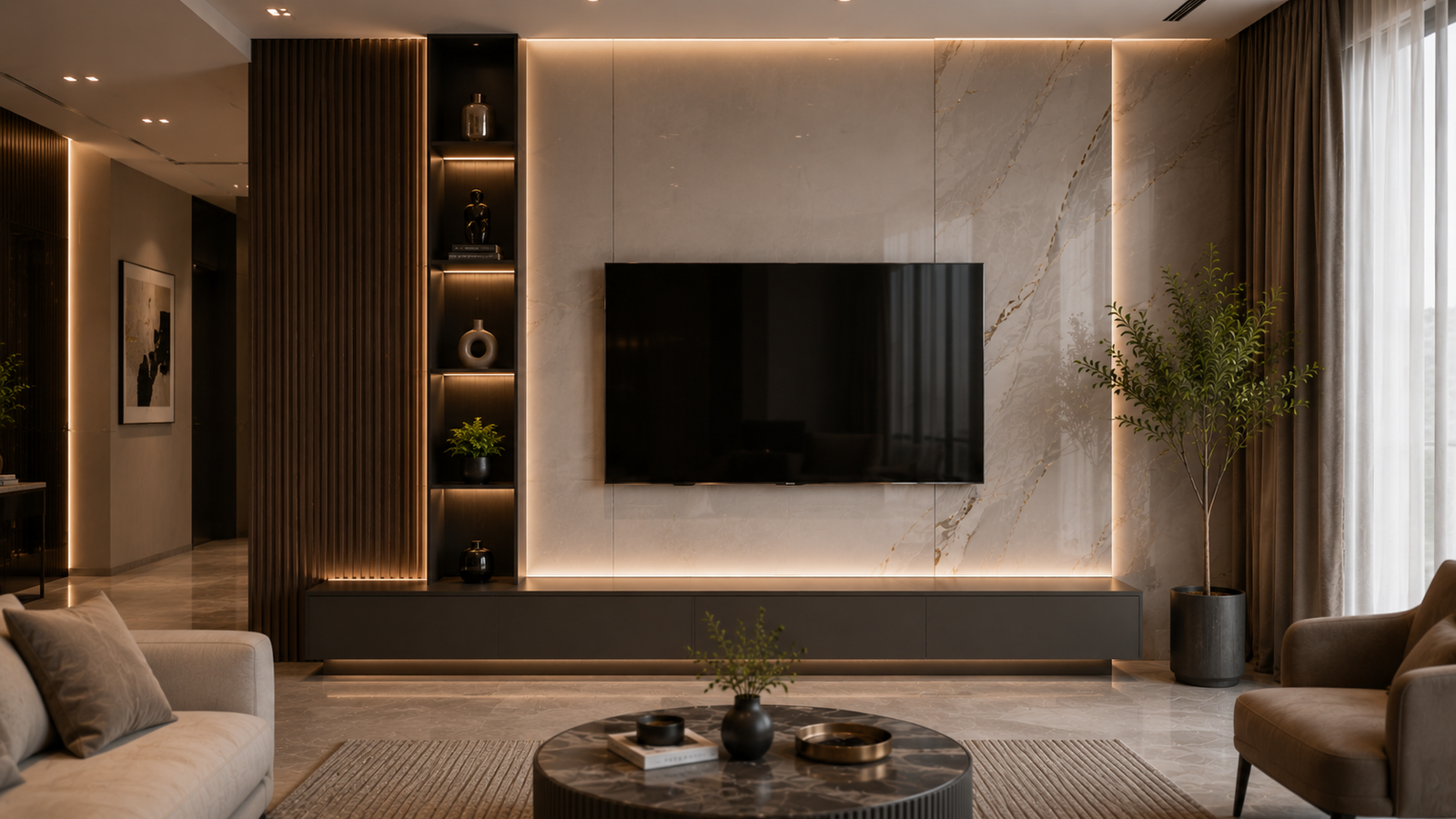
There is a particular kind of room that has come to define modern luxury. It is not the room with the boldest furniture or the most expensive finishes. It is the room that feels resolved. Nothing competes for attention. Every surface has earned its place. The lighting feels considered without being staged.
This is quiet luxury. It is the design language behind most of the homes featured in serious architectural publications today, and it sits in deliberate contrast to the maximalist interiors of the previous decade. This guide is for anyone who wants to understand how quiet luxury actually works, beyond the moodboards, and how to apply it to a real home.
What Quiet Luxury Actually Means in Interior Design
Quiet luxury is often described as a style, but it is more accurately a discipline. It is the practice of removing everything that does not need to be there, and investing the saved budget into the few things that remain.
The visual result is calm. Neutral palettes, natural materials, considered lighting, and minimal visual noise. But the underlying logic is harder to copy than the look. It requires a level of restraint that runs against most natural design instincts.
A loud room is easy. You add another colour, another pattern, another accessory. A quiet room is difficult. You have to commit to fewer elements and trust that the proportions, materials and light will carry the space without help.
This is why the best examples of the style are usually the work of architects rather than decorators. Architecture is about composition. Quiet luxury is composition applied to interiors.
The Core Principles of a Quiet Luxury Interior
The style is consistent across the best examples, and it tends to follow four principles.
Material Honesty
Surfaces should look like what they are. Stone reads as stone. Timber reads as timber. Plaster reads as plaster. Imitation finishes are not avoided, but the better ones are chosen specifically because they capture the genuine character of the original material rather than a stylised version of it.
This is why high quality marble wall panels, stone effect surfaces and real timber slat panels have become so widely specified. They allow honest materiality without the structural cost of solid stone or full timber cladding.
Limited Palette
Quiet interiors use three to five materials across the whole home, repeated consistently from room to room. Stone, timber, plaster, soft textiles and a single metallic accent is a typical palette.
Repetition is what makes the home feel architecturally coherent rather than decorated. Each room becomes a variation on the same theme rather than a different style entirely.
Considered Negative Space
Empty space is treated as a design element in its own right. Walls are left unbroken. Surfaces are not filled. Corners are allowed to breathe.
This is the principle most often misunderstood. Negative space is not absence of design. It is the most disciplined design choice in the room.
Light as a Material
Quiet luxury interiors treat light the way they treat stone or timber. It is something to be specified, shaped and layered. Natural light is welcomed in through deep reveals and tall openings. Artificial light is layered through ambient, task and accent sources, almost always on dimmers.
There is rarely a single bright overhead light. The room is lit from multiple low intensity sources, which is what gives it that particular sense of calm in the evening.
The Architectural Backbone of a Quiet Home
Before any furniture is chosen, the architecture of the room has to support the style. This is where most attempts at quiet luxury fall short, because the renovation begins at the wrong stage.
The starting point is the wall, the floor and the ceiling. If these three surfaces are correct, almost any furniture choice that follows will read well. If they are wrong, no amount of styling will recover the space.
A neutral matte stone floor or a wide plank timber floor in a calm tone sets the base. Plaster walls or matte stone effect wall panels carry the vertical surfaces. The ceiling, often the most neglected surface, should be a clean plaster finish with carefully placed lighting rather than a busy grid of downlights.
This three surface foundation is what allows the rest of the home to be quiet.
Designing the Walls in a Quiet Luxury Home
Walls do most of the work in defining the atmosphere of a quiet interior. The temptation is to leave them entirely plain. The better approach is to give one wall in each principal room a quiet architectural treatment, and let the others stay calm.
In the living room, a single feature wall in a honed marble panel or a soft 3D textured finish anchors the seating area. The other three walls remain in matte plaster or stone effect.
In the bedroom, a full height wooden slat panel behind the bed replaces the headboard and adds warmth, rhythm and acoustic softness in one decision. The remaining walls stay quiet.
In the entrance hall, a sculptural wall treatment is justified. This is the room where first impressions are set, and a textured feature wall here sets the tone for the rest of the home.
In bathrooms, a single dominant material usually wins. Marble wall panels in a master ensuite, or stone effect PVC decorative sheets in a guest bathroom, carry the whole room without needing any supporting decoration.
The principle running through all of these is the same. One quiet architectural move per room, then let the space settle.
The Furniture Edit
Furniture in a quiet luxury home tends to follow a few consistent patterns.
Low profile seating is preferred. Deep sofas with clean lines, slightly oversized in scale, almost always in a neutral fabric. Bouclé, brushed cotton and washed linen are the dominant upholstery choices.
Wooden furniture is solid and unadorned. Oak, walnut and ash in matte finishes, with simple proportions and no visible hardware where possible. The pieces should feel like they belong to the architecture rather than competing with it.
Stone appears once or twice. A marble coffee table, a travertine side table, a stone topped console. One stone element per major room is enough.
Metal is used sparingly and consistently. Brushed brass, blackened steel or aged bronze, chosen once and repeated throughout the home. Mixing metal finishes in the same room rarely works in this style.
The pieces are fewer in number than in a conventionally decorated home, but each one is chosen with significantly more care.
Lighting a Quiet Luxury Interior
Lighting is where quiet luxury homes most clearly separate from ordinary interiors. The best examples treat lighting design as a discipline equal to architecture and material selection.
Ambient lighting comes from multiple low intensity sources rather than a single overhead. Wall washers, recessed perimeter lighting and concealed strips behind joinery handle most of the general light in the room.
Task lighting is added where needed. Reading lamps beside seating, a pendant over the dining table, focused light over a kitchen island. Each task light is positioned for its specific function rather than for decoration.
Accent lighting picks out the textures. A grazing light along a wooden slat panel, a wall washer down a marble feature wall, a discreet uplight beside a sculptural object. This is the layer that makes a quiet room feel cinematic in the evening.
Every layer should be on a dimmer. The single most common upgrade in a quiet luxury renovation is replacing every switch with a dimmer. The transformation in how the home feels at night is significant.
Soft Layers and the Role of Textiles
A quiet room without soft layers feels cold. Textiles are how the architecture becomes liveable.
Curtains should run floor to ceiling, not window to sill. Linen and wool blends in colours close to the wall finish are typical. The intention is not to make a feature of the curtain, but to soften the room and control acoustics.
Rugs anchor seating and sleeping areas. Wool, jute and silk blends in tones that work with the floor rather than contrasting with it. The rug is a calming layer, not a focal point.
Cushions and throws are restrained. Three or four cushions on a large sofa, not eight. One thrown blanket, not a styled stack. The textiles should look used rather than arranged.
Bedding follows the same logic. Heavy linen, washed cotton, neutral tones. Layers that look like they belong to someone rather than to a showroom.
The Things Quiet Luxury Homes Leave Out
Understanding what is removed from these interiors is as instructive as understanding what is added.
Visible technology is minimised. Televisions are recessed, hidden behind sliding panels or chosen in formats that disappear when off. Speakers are concealed. Cabling is run within the wall.
Decorative clutter is edited heavily. Shelves are not filled with objects. Surfaces are not crowded with frames and ornaments. The few objects that remain are chosen with significant care.
Visual signage is removed. Brand logos on appliances, hardware and accessories are minimised. The home does not announce what it cost.
Bright artificial lighting is rejected almost entirely. There is no flat overhead lighting in the principal rooms. The lighting plan is layered, dimmable and warm.
Once you start noticing what is absent in these homes, you understand the style more accurately than any moodboard can communicate.
Quiet Luxury Outside the Principal Rooms
The discipline extends to the rooms that are often overlooked.
The hallway carries the same finishes as the rest of the home rather than being treated as a transition space. Continuous flooring, continuous wall treatment, considered lighting. The hall becomes part of the architectural composition rather than a corridor.
The utility and laundry areas are designed with the same restraint. Concealed appliances, matching joinery, calm lighting. The standard does not drop because the room is functional.
Outdoor spaces are treated as extensions of the interior. Material palettes flow through to the terrace. Furniture proportions match the indoor seating. Lighting is layered just as carefully.
This consistency from room to room is what separates a genuinely resolved home from one that simply has a beautiful living room.
Common Mistakes When Attempting the Style
A few patterns recur in projects that try for quiet luxury and miss.
The first is mistaking beige for restraint. Quiet does not mean colourless. It means considered. A monochrome beige room with no texture variation feels flat rather than calm. The restraint should be in the number of elements, not in the absence of character.
The second is over editing without investing. Removing things is only half of the discipline. The remaining elements have to be of genuine quality. A nearly empty room filled with low quality furniture reads as sparse rather than refined.
The third is ignoring lighting. A perfectly designed room with flat overhead lighting will never feel right. Lighting is not a finishing touch. It is part of the architecture.
The fourth is decorating rather than designing. Quiet luxury starts with the wall, the floor and the ceiling. Adding considered furniture to a poorly finished room will not produce the look. The shell has to be correct first.
Starting a Quiet Luxury Renovation
The most useful starting point is a material palette. Three to five samples that will repeat through the home. A wall finish, a floor finish, a timber, a stone and a metal.
View the samples together, in the actual lighting of the home, across both day and evening. If the combination still feels right after a few days, this is the palette to commit to.
Once the palette is fixed, the architecture follows. Walls, floors, ceilings and lighting are specified within the palette. Then the furniture. Then the textiles. Then the few objects that earn a place.
Working in this order is how quiet luxury homes are built. Working in the opposite order, from accessories backwards, is how most attempts fail.
Bringing Quiet Luxury into Your Home
The style rewards patience and restraint more than budget. A modest home built with discipline can read as more refined than an expensive home built with none.
At SKY Pannel, our role sits at the architectural layer of the home. The marble wall panels, wooden slat installations, stone effect surfaces and matte finishes that form the backbone of a quiet luxury interior. Get these right, and the rooms that follow almost build themselves.
Browse the SKY Pannel collection, request samples, or speak to our specification team to begin.
Frequently Asked Questions
Is quiet luxury the same as minimalism?
Not quite. Minimalism focuses on the absence of elements. Quiet luxury focuses on the quality and proportion of the elements that remain. A quiet luxury home can include layered textiles, sculptural furniture and considered art, none of which would belong in a strict minimalist interior.
Does quiet luxury have to be neutral in colour?
No. Most examples use a neutral palette because it is the easiest way to achieve calm, but the style works equally well in deeper tones. A muted clay, a soft sage, or a charcoal palette can all support the principles, provided the discipline of limited materials and considered lighting is maintained.
Can quiet luxury work in a small home?
Yes, and arguably better than in a large home. The restraint of the style suits compact spaces. Fewer materials, calm lighting and considered proportions make small rooms feel resolved rather than cluttered.
How long does it take to design a quiet luxury home properly?
The design phase is typically slower than a conventional renovation, because the material selection requires real samples and time to settle. The construction phase is similar in length. Most considered projects of this kind run over six to twelve months from brief to completion.
Is the style expensive to achieve?
The cost varies significantly. The materials at the architectural layer should be of genuine quality, which is where most of the budget sits. Furniture and accessories can be fewer in number, which often balances the overall cost. A modest home executed with discipline can outperform a larger one with weaker material choices.
Will the style date quickly?
Quiet luxury draws on architectural principles rather than trends, which tends to make it more durable than trend led styles. The specific palettes and finishes will evolve, but the underlying discipline has been the language of considered interiors for decades and is likely to remain so.
What is the single most important upgrade to start with?
Lighting. Replacing flat overhead lighting with layered, dimmable lighting on multiple circuits transforms how a home feels more than any other single change. The material palette can follow.
How do I bring quiet luxury into a rented home?
Focus on the layers you can change. A neutral textile palette, considered lamps with warm dimmable bulbs, a single sculptural object, an edited approach to surfaces and storage. Removable panel solutions can also be considered if a feature wall is desired without permanent installation.
Begin Your Quiet Luxury Project with SKY Pannel
The most refined interiors are quieter than people expect. They reward the discipline to remove rather than to add, and the patience to specify the few things that remain at a genuinely high standard.
Browse the collection, request samples, or speak with our specification team to start.
