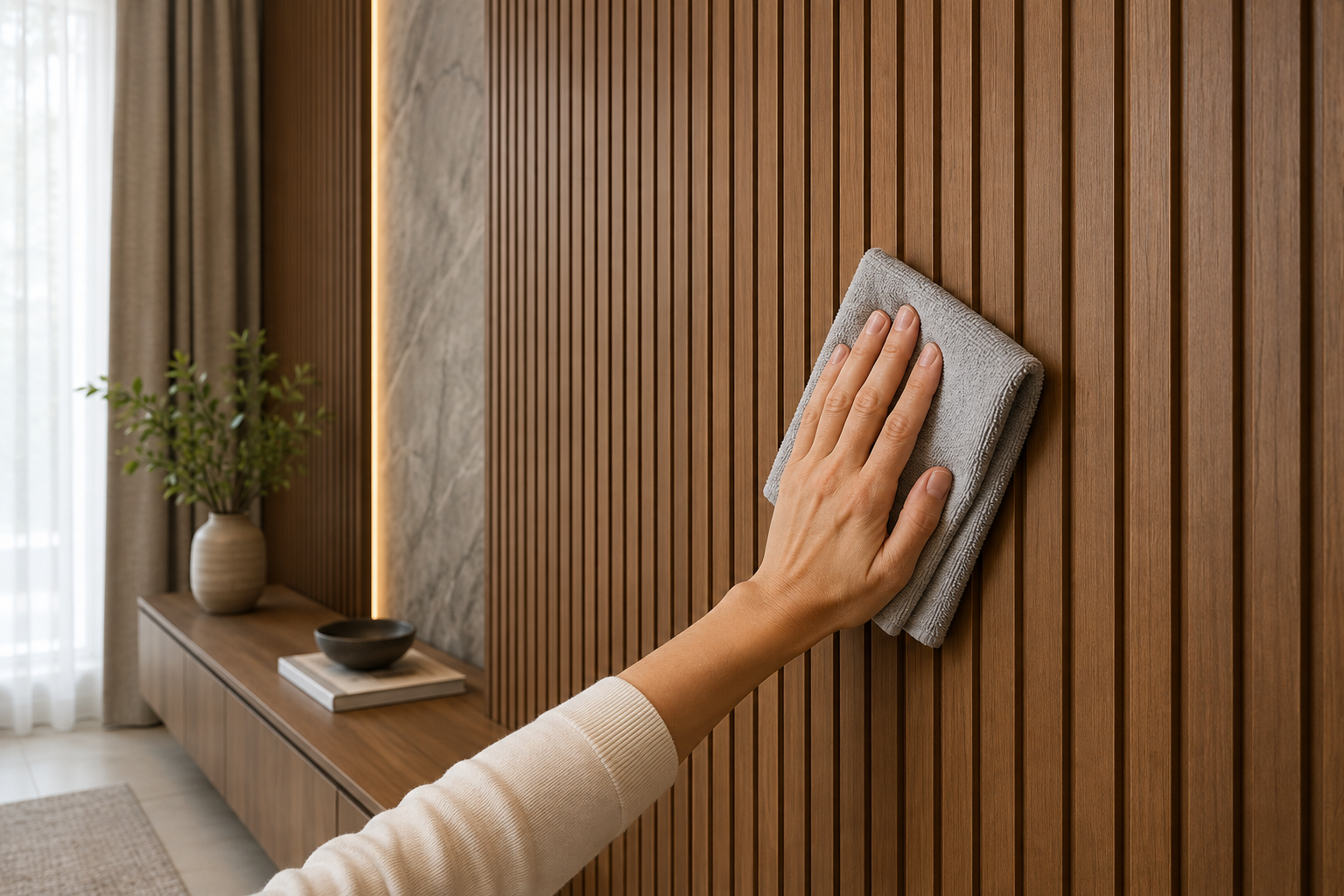
The appeal of WPC wall panels lies partly in their low maintenance requirements compared to paint, wallpaper, or solid wood. Yet “low maintenance” does not mean “no maintenance.” To keep your WPC wall panels looking as fresh after five years as they do on installation day, you need to understand how to clean them properly, what products work best, and what mistakes to avoid. The good news is that proper care is genuinely straightforward. Unlike painted walls that need repainting, or solid wood that needs periodic sealing, WPC panels require only basic cleaning with supplies most households already have on hand.
This guide walks through practical cleaning methods for both routine maintenance and specific stain removal, explains what products work and what does not, and covers the seasonal considerations relevant to different Pakistani climates. Whether you have panels in a busy kitchen, a humid bedroom, or a commercial office setting, the cleaning principles remain consistent: gentle care preserves the finish, and avoiding harsh chemicals protects the material for the long term.
Quick Answer
WPC wall panels should be cleaned with a soft cloth and warm water, or a damp cloth with mild detergent for light soiling. For stubborn marks, white vinegar on a soft cloth works well. Avoid pressure washers, steam cleaners, harsh chemicals, and abrasive scouring pads, which can damage the UV-protected finish. Most households can maintain WPC panels adequately with basic tools and products costing less than PKR 500 per year.
Table of Contents
- Daily and Weekly Cleaning Routine
- Cleaning Products That Work for WPC Panels
- Specific Stain Removal Techniques
- What to Avoid When Cleaning WPC Panels
- Seasonal Cleaning Considerations for Pakistan
- Maintaining WPC Panels in Commercial Spaces
- Long-Term Care and Finish Preservation
- Troubleshooting Common Panel Issues
- Frequently Asked Questions
- Conclusion
1. Daily and Weekly Cleaning Routine
The most important maintenance habit is regular dusting. The embossed grain texture of Sky Panels WPC boards naturally traps dust particles, which means dust sits in the texture rather than marking the smooth surface. Consequently, a brief weekly dust with a microfibre cloth is usually sufficient to keep the panels looking fresh and prevents dust buildup.
Microfibre Cloth Dusting
Use a dry microfibre cloth and wipe the panel surface with gentle, linear motions. Microfibre is the preferred tool because its fine fibres grab dust particles effectively without scratching the UV-protected finish. Avoid using paper towels or rough fabrics, which can leave marks or damage the surface coating over time. A single microfibre cloth costs roughly PKR 100-200 and lasts for several years with basic care (wash in cool water, air dry).
For panels in high-traffic areas or kitchens where dust accumulates faster, dusting twice weekly keeps the surface looking optimal. In humid climates like Karachi or during Lahore’s monsoon season, dust combined with moisture can form a light film on the panel surface. Regular dusting prevents this buildup.
Light Damp Cloth Cleaning
For light cleaning (dust with potential fingerprints or minor marks), use a soft cloth dampened with cool or lukewarm water only. Wring the cloth thoroughly so it is damp but not wet. Wipe the panel surface gently, then use a dry cloth to remove excess moisture. This process removes dust and light marks without any cleaning products.
The key is keeping moisture minimal. WPC panels are moisture-resistant but not waterproof. Prolonged exposure to wet cloths, particularly in seams and edges, can eventually affect panel joints. A damp cloth (not dripping wet) used briefly is safe, but soaking panels or leaving water sitting on the surface should be avoided.
Establishing a Routine
Most households find that a five-minute weekly dusting keeps WPC panels looking like new. For example, each Friday evening, take a microfibre cloth and dust the panel wall whilst watching television. This takes minimal time and keeps dust from accumulating. In kitchens or bathrooms where the panels see more activity, a quick damp cloth wipe once a week (in addition to dusting) prevents fingerprints and light soiling from becoming visible.
2. Cleaning Products That Work for WPC Panels
The UV-protected top coat on Sky Panels boards is sealed at the factory and is designed to resist most household soiling. Consequently, most routine cleaning requires only water and simple, common household products. Expensive specialty cleaners are unnecessary and sometimes counterproductive.
Mild Detergent Solution
For marks, fingerprints, or light grease, mix a few drops of mild dish detergent (the kind used for hand-washing dishes) in lukewarm water. Use a soft cloth dampened with this solution, wipe the affected area gently, then follow with a dry cloth to remove any residue. This approach handles most household soiling without risk to the panel finish.
Common mild detergents like Sunlight, Dettol, or Dawn work well. Avoid harsh degreasers or antibacterial cleaners, which can leave residue on the panels. The mild detergent approach is safe, effective, and costs just a few rupees per cleaning.
White Vinegar for Stubborn Marks
For stubborn marks or water spots that mild detergent alone does not remove, white vinegar is highly effective. Mix one part white vinegar with three parts water, soak a soft cloth in the solution, and apply to the mark. Let it sit for 30 seconds to one minute, then wipe with a clean damp cloth and dry thoroughly. The mild acidity of vinegar cuts through marks without damaging the panel finish.
White vinegar is inexpensive (roughly PKR 50-100 per bottle from any supermarket), non-toxic, and safe to use on WPC panels. It is particularly useful for water stains in humid climates where mineral deposits from water splash can mark the surface.
Isopropyl Alcohol for Difficult Marks
For marks that resist both mild detergent and vinegar, dilute isopropyl alcohol (70% rubbing alcohol, available at pharmacies) with equal parts water. Use this solution sparingly on a cloth to target the mark. Isopropyl alcohol evaporates quickly and does not leave residue, making it safe for WPC panels when used diluted. However, use this approach only for genuinely stubborn marks, not as a routine cleaner.
Always test any new cleaning solution on an inconspicuous area first to confirm it does not affect the panel finish.
Products to Avoid
Avoid the following, which can damage or leave unwanted residue on WPC panels:
- Ammonia-based cleaners (like window cleaner)
- Bleach or bleach-containing products
- Harsh degreasers or industrial cleaners
- Wax-based furniture polishes
- Oil-based products
- Abrasive scouring powders
These products either leave residue that makes panels look dull, or contain chemicals that can affect the UV protective coating.
3. Specific Stain Removal Techniques
Different types of marks require different approaches. Understanding which technique to use prevents accidental damage from aggressive cleaning methods.
Grease and Oil Marks
Kitchen panels near cooking areas can accumulate light grease deposits. Mild detergent solution (as described above) handles most grease marks. For stubborn grease, add a single drop of extra mild dish detergent to the water, create a slightly more concentrated solution, and apply with a soft cloth. The key is using minimal detergent and thoroughly removing all residue with a dry cloth afterward. Detergent residue left on the panel will make it appear dull.
Ink and Pen Marks
Children’s pen marks or accidental ink stains require a different approach. First, try mild detergent and water. If that does not work, test isopropyl alcohol on a hidden area first, then apply diluted alcohol to the mark with a soft cloth. Most pen ink responds to alcohol, but always test first on an inconspicuous spot.
Permanent markers are more stubborn. If alcohol does not remove the mark, avoid aggressive rubbing, which can damage the finish. Instead, consult Sky Build Mart for advice on stubborn marks, as attempting to force removal may do more harm than the mark itself.
Water Stains and Mineral Deposits
In areas where water splashes occur (near bathrooms or sinks), mineral deposits from hard water can leave visible marks. White vinegar (as described above) is ideal for this situation. The mild acidity dissolves mineral deposits without affecting the panel finish. For severe mineral buildup, a slightly more concentrated vinegar solution (equal parts vinegar and water) works better than the diluted version.
Dust and Surface Film in Humid Climates
In Karachi and coastal areas, sustained humidity combined with dust can create a thin film on the panel surface. Regular dusting prevents this, but if a film develops, a soft cloth dampened with white vinegar solution removes it effectively. The film is usually just dust particles bound to the surface by moisture, so gentle treatment is sufficient.
Rust Stains from Metal Fixtures
If a metal shelf bracket or other fixture nearby has rusted, rust staining may appear on the panel below. Rust stains require isopropyl alcohol or a dedicated rust remover (available at hardware stores). Apply the solution to the stain, let it sit briefly, then wipe thoroughly with a clean damp cloth. This situation is rare with WPC panels since the material itself does not rust, but nearby metal fixtures can occasionally transfer rust marks.
4. What to Avoid When Cleaning WPC Panels
Critical: Methods and Tools That Damage WPC Panels
Using the wrong cleaning method can damage the UV-protected finish permanently, so understanding what to avoid is as important as knowing what works.
Pressure Washers and High-Pressure Water
Never use a pressure washer or high-pressure water spray on WPC panels. The force of the water can penetrate panel seams, damage the edges, and affect the structural integrity of the panels over time. Even if immediate damage is not visible, water forced into seams can eventually cause the panels to warp or the finish to separate.
Steam Cleaners
Steam cleaners should also be avoided. The intense heat and moisture combination can damage the panel finish and affect the composite material. Additionally, steam can penetrate seams and joints, potentially causing long-term damage.
Abrasive Scouring Pads and Brushes
Do not use scouring pads, wire brushes, or rough scrubbing tools on WPC panels. The UV-protected finish is durable but not designed to withstand abrasive scrubbing. Such tools will scratch and dull the finish, making the panels look worn prematurely. Always use soft cloths only.
Bleach and Harsh Chemicals
Bleach can permanently discolour WPC panels and damage the protective coating. Similarly, strong chemical cleaners, degreasers, and ammonia-based products are too aggressive for the panel surface. Stick with mild, household-grade products only.
Excessive Water and Soaking
Whilst WPC panels are moisture-resistant, they are not waterproof. Leaving wet cloths on the panels, spraying water directly onto the surface, or allowing water to pool in seams can eventually affect the panels. Moisture exposure should be brief and minimal. A damp cloth used quickly is safe; prolonged water exposure is not.
Wax and Oil-Based Products
Do not apply furniture wax, oil polish, or similar products to WPC panels. The panels are pre-finished at the factory and do not require waxing. Wax or oil products will leave a residue that makes the panels appear dull and sticky. The UV-protected finish already provides the sheen and protection the panels need.
Mounting Heavy Items Directly Into Panels
Whilst this is not a cleaning concern, it relates to panel care. Do not drill directly into the panels or mount heavy shelves or fixtures directly into the panel surface. The panels are not load-bearing. Any heavy mounting should anchor into the batten framework behind the panels, not the panels themselves.
5. Seasonal Cleaning Considerations for Pakistan
Pakistan’s varied climate means that cleaning needs change seasonally. Understanding these variations helps you maintain optimal panel condition year-round.
Monsoon Season (June-September)
During Lahore and other regions’ monsoon seasons, humidity spikes dramatically. Dust combined with moisture can create a light film on panels. Increase cleaning frequency to weekly damp cloth wiping (in addition to regular dusting) during monsoon months. Pay particular attention to panel seams and edges where moisture can accumulate.
After the monsoon ends, do a more thorough cleaning to remove any accumulated dust or mineral deposits. The increased humidity during monsoon months means more dust particles bind to the panel surface, creating a visible film that a basic dusting does not fully remove.
Dusty Seasons
During dry months in Lahore, Faisalabad, and Peshawar, dust can accumulate quickly, particularly on south-facing panels exposed to afternoon heat. Increase dusting frequency to twice weekly during peak dust seasons. The embossed texture of WPC panels actually helps with this, as dust sits in the grain rather than marking the smooth surface. However, heavy dust accumulation still looks untidy.
High-Humidity Coastal Climate (Karachi, Hyderabad)
In Karachi’s sustained high humidity, a weekly damp cloth wipe helps prevent the thin film that humidity can create. The high salt content in coastal air does not harm WPC panels, but salt deposits can sometimes leave marks. A white vinegar solution removes salt deposits effectively.
Winter Months (November-February)
In northern cities like Islamabad and Rawalpindi, winter brings lower humidity and cooler temperatures. Cleaning needs are minimal during these months. A simple weekly dust is usually sufficient. However, if panels are near fireplaces or heating units, smoke or heating-related dust may require more frequent cleaning.
Summer Heat
High summer temperatures do not directly affect cleaning requirements, but summer dust and heat-related expansion can mean more marks on the panel surface. Fingerprints and light marks may be more visible as dust settles on panels throughout the day. A quick wipe once or twice weekly keeps the panels looking fresh despite summer conditions.
6. Maintaining WPC Panels in Commercial Spaces
Commercial applications (offices, shops, showrooms, hotels) typically require more frequent cleaning than residential settings due to higher foot traffic and more handling.
Commercial Cleaning Schedule
Commercial spaces should follow a more rigorous cleaning schedule. Daily dusting in high-traffic areas (reception desks, corridors, showroom walls) keeps the panels looking polished and professional. For panels that see significant contact (people brushing past regularly), a weekly damp cloth wipe in addition to daily dusting prevents fingerprints and marks from becoming visible.
Using Professional Cleaning Services
Many commercial establishments contract professional cleaning services. When briefing cleaning contractors on WPC panel care, emphasise the following: use only soft microfibre cloths, avoid pressure washers and steam cleaners, use mild detergent solution only, and never apply wax or oil products. Providing these instructions upfront prevents accidental damage from overzealous cleaning.
Damage Prevention in High-Traffic Areas
In very high-traffic commercial settings, consider whether 24mm thickness panels might be more appropriate than standard 17mm panels. The greater rigidity of 24mm boards means they withstand impacts and handling better in commercial environments. Regular cleaning is still required, but the thicker material is more resistant to wear.
Stain Management Protocol
Establish a protocol for immediate stain response in commercial spaces. Minor marks handled immediately with mild detergent solution prevent the mark from setting. Stubborn stains can be addressed with white vinegar or isopropyl alcohol if mild detergent does not work. Train staff or cleaning contractors on this progression so issues are resolved quickly before they become permanent.
7. Long-Term Care and Finish Preservation
With consistent basic cleaning, WPC panels maintain their appearance for 10+ years without requiring refinishing or resealing.
The UV-Protected Finish Does Not Need Resealing
Unlike solid wood, which requires periodic resealing, or paint, which needs recoating, WPC panels are sealed permanently at the factory. The UV-protected top coat is integral to the panel, not a surface treatment that degrades over time. Provided you avoid harsh chemicals and excessive moisture, the finish remains intact indefinitely.
Preventing Premature Finish Wear
Finish wear is primarily caused by abrasive cleaning methods, not by normal use or light cleaning. Avoiding scouring pads, pressure washers, and harsh chemicals ensures the finish does not prematurely dull or scratch. Regular gentle cleaning actually helps preserve the finish by removing dust and contaminants that could otherwise become embedded in the surface.
Colour Stability
The colour of WPC panels is stable and does not fade significantly over time, even in sun-exposed locations. The UV protection in the factory finish prevents the fading that affects paint and cheaper wallpaper. After 10 years, a WPC panel wall in a sunny bedroom looks nearly identical to a panel in a north-facing hallway with minimal sunlight.
When Panels Require Replacement
With proper care, individual panels typically last 10+ years without replacement. If a panel becomes damaged (cracked beyond minor marks, or warped), it can be unclicked from its neighbours and replaced individually. This is considerably easier than repainting a wall or replacing wallpaper. Most households never need to replace panels if they maintain basic cleaning practices.
8. Troubleshooting Common Panel Issues
Dull or Hazy Finish After Cleaning
A dull appearance after cleaning usually indicates detergent or soap residue left on the panel surface. Solution: wipe the panel thoroughly with a clean damp cloth (water only) until all residue is removed, then dry completely with a soft cloth. Avoid using excessive detergent in future cleanings.
Sticky or Tacky Feeling on the Surface
A sticky feeling suggests wax, oil, or heavy detergent buildup. Solution: wipe with a cloth dampened in white vinegar solution to cut through residue, then rinse thoroughly with water and dry completely.
Water Marks or Spots
Water spots are caused by minerals in hard water. Solution: use white vinegar solution or isopropyl alcohol on a soft cloth to remove the marks. To prevent recurrence in future, wipe any water splashes immediately rather than allowing them to dry on the panel surface.
Scratches or Scuff Marks
Light scratches from normal wear are usually just superficial marks on the finish rather than actual damage. Solution: try gentle cleaning with mild detergent solution or white vinegar first, as the “scratches” may actually be dirt or residue. True gouges in the material are rare with proper care and cannot be repaired without replacing the panel.
Panel Edges Showing Discolouration
If panel edges show discolouration or swelling, this indicates water has penetrated the edges. Solution: immediately wipe any water from panel edges and seams and allow the area to dry completely. This situation is rare with proper cleaning practices that avoid excess water near seams. If discolouration persists or spreads, contact Sky Build Mart for assessment, as panel replacement may be necessary.
Visible Mould or Mildew in Humid Areas
Mould or mildew growth is rare on WPC panels but can occasionally occur in bathrooms or very humid environments if panels are not cleaned regularly. Solution: clean immediately with white vinegar solution or diluted isopropyl alcohol. The mould is typically on the panel surface rather than embedded in the material. After removal, increase cleaning frequency to prevent recurrence.
9. Frequently Asked Questions
Keep Your WPC Panels Looking Like New
Browse the complete Sky Panels WPC wall panel collection and discover how easy it is to maintain these durable, beautiful panels for years to come. For specific panel care questions, contact Sky Build Mart directly.
Conclusion
Keeping WPC wall panels clean and well-maintained is genuinely simple. A weekly microfibre cloth dust, occasional damp cloth cleaning, and basic common sense about avoiding harsh chemicals or excessive water are all that is needed to preserve your panels’ appearance for 10+ years. Unlike paint, which requires periodic recoating and fades over time, or solid wood, which needs regular sealing and attracts termites, WPC panels maintain their colour, finish, and structural integrity with minimal effort.
The investment you made in installing Sky Panels WPC boards pays dividends through years of looking as fresh as installation day. The panels are engineered to resist moisture, pests, and general wear, and basic cleaning practices ensure that durability is fully realised. Most household items already in your home (microfibre cloths, mild detergent, white vinegar) are all you need to maintain optimal condition.
Whether you have panels in a bedroom, kitchen, bathroom, office, or commercial space, the principles remain consistent: gentle care with soft cloths and mild products, avoiding harsh chemicals and excessive moisture, and addressing marks promptly before they set. Follow these simple practices, and your WPC panel walls will remain a highlight of your space for years to come.
Sky Build Mart is Pakistan’s leading supplier of WPC wall panels and interior finishing materials. With hundreds of installations across Karachi, Lahore, Islamabad, and other cities, the team understands the practical maintenance challenges customers face in different climates. This guide draws on real-world experience helping customers maintain their panels and ensuring installations look as good years after completion as they do on day one.
