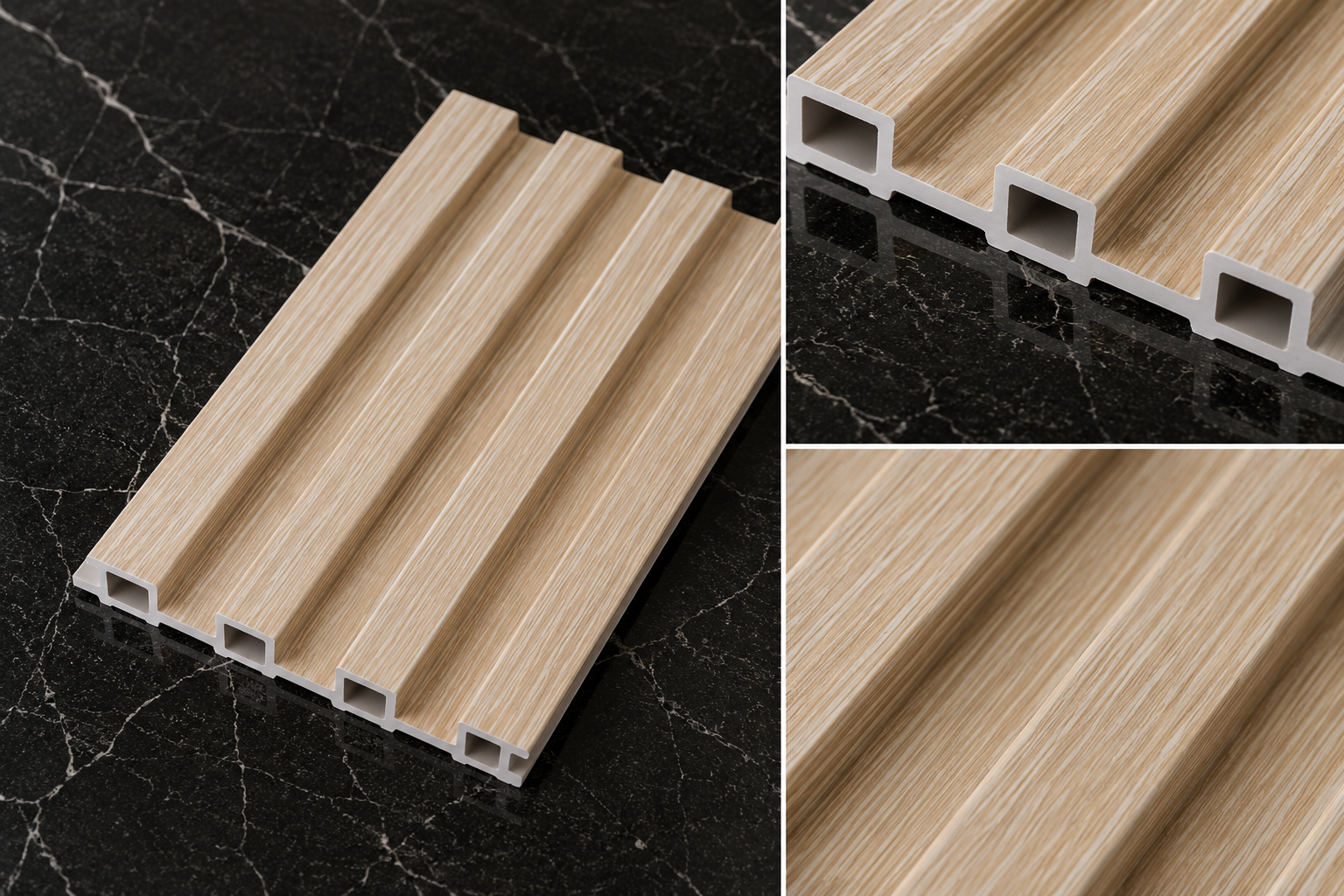
Anyone weighing up a wall finish for a Pakistani home or office eventually asks the same practical question: what are the real benefits of WPC wall panels, and do they justify the switch away from paint, tiles, or solid timber? Having supplied hundreds of installations across Karachi, Lahore, and Islamabad, however, we can answer that plainly. The benefits are not marketing claims, they are measurable differences in how a wall performs over the following five to ten years.
At Sky Build Mart, our in-house brand Sky Panels produces 16 wood-effect WPC wall panel designs, each built to resist humidity, resist pests, and hold its appearance with almost no upkeep. Consequently, the material has become the default recommendation we give homeowners and designers who are tired of repainting damp-stained walls every few years.
This guide, therefore, walks through every meaningful benefit of WPC wall panels in turn, backed by a direct comparison against paint, wallpaper, and tiles, and closes with a room-by-room look at where those benefits matter most across Pakistan.
Sky Panels WPC boards are engineered to resist swelling, cracking, and warping in humid conditions. Panels are priced from PKR 1,900up to PKR 2,000 per panel, across 16 designs, with delivery available nationwide.
- Moisture and Humidity Resistance
- Termite and Pest Resistance
- Low Maintenance, Easy Cleaning
- Fast, DIY-Friendly Installation
- A Realistic Wood Look Without the Wood-Level Cost
- Long-Term Durability and Value
- Sixteen Designs, Plus Curved Options
- WPC Wall Panels vs Paint, Wallpaper, and Tiles
- Room-by-Room: Where the Benefits Matter Most
- Frequently Asked Questions
- Conclusion
1. Moisture and Humidity Resistance
The single biggest benefit of WPC wall panels is how they behave around moisture. Because the polymer content in a WPC board surrounds the wood fibre rather than leaving it exposed, the panel does not absorb ambient humidity the way painted plaster or solid timber does. Consequently, walls finished in WPC do not develop the damp patches, bubbling, or peeling that painted walls commonly show after a monsoon season.
Why This Matters Across Pakistan
Humidity varies significantly between Pakistani cities, yet few regions are entirely spared. Coastal Karachi deals with sustained high humidity for much of the year. Lahore experiences a pronounced monsoon season that leaves painted walls vulnerable for weeks at a time. Even the comparatively drier climates of Islamabad and Rawalpindi see seasonal humidity spikes that stress conventional wall finishes. WPC panels, by contrast, are unaffected by these swings, which is why the material has become particularly popular in Faisalabad and Peshawar as well as the major coastal cities.
How the Composite Structure Works
The moisture resistance benefit is not accidental, it is a direct result of how the material is manufactured. Because the wood fibre sits fully encased within the polymer matrix rather than exposed at the surface, water simply has nowhere to penetrate and cause the fibre to expand. Consequently, a WPC panel behaves consistently whether the surrounding air is dry, as in an Islamabad winter, or heavily humid, as during a Karachi summer. This structural stability is, in practice, the foundation that every other benefit in this guide builds upon.
2. Termite and Pest Resistance
Solid timber panelling carries an ongoing termite risk that many homeowners underestimate until the damage is already done. WPC wall panels, however, remove that risk almost entirely. Because the polymer component encases the wood fibre, there is no exposed organic material for termites to feed on, which means a WPC wall does not need periodic pest treatment the way a solid wood installation does.
A Benefit That Grows Over Time
This resistance becomes more valuable the longer a panel stays on the wall. Solid timber feature walls may look identical to WPC on day one, but five years later, that timber often shows signs of insect activity that require costly remedial work. WPC panels, however, continue performing exactly as they did on installation day, which is one of the clearest long-term arguments in favour of the material.
Comparing Pest Risk in Practice
Homeowners rarely notice termite damage until it has already spread, since the early signs are usually hidden beneath paint or veneer. In practice, this means solid wood panelling can carry ongoing repair costs that are difficult to predict or budget for. Additionally, treating an active infestation often disrupts the room for days and may require replacing sections of the panelling entirely. WPC removes this uncertainty altogether, since there is no exposed organic material for pests to target in the first place.
3. Low Maintenance, Easy Cleaning
Every homeowner values their time, and consequently WPC wall panels are designed with that in mind. Unlike painted walls, which need repainting every few years to stay presentable, or solid wood, which needs regular polishing and sealing, a Sky Panels WPC board only needs an occasional wipe with a soft cloth.
What Daily Maintenance Actually Looks Like
In practice, most households simply dust the surface with a microfibre cloth as part of a regular cleaning routine. For marks or light grease, a damp cloth with mild detergent is sufficient. There is no sealing, no repainting, and no specialist product required. As a result, the total cost of ownership over a decade is considerably lower than for paint or solid timber, even though the upfront material cost is comparable.
Comparing Maintenance Costs Over a Decade
A typical painted room in Pakistan needs repainting roughly every three to five years to stay presentable, particularly in humid cities. Over ten years, that adds up to two or three full repainting cycles, each involving materials, labour, and the inconvenience of clearing the room. Solid wood panelling, similarly, needs periodic polishing and resealing to maintain its finish. WPC panels avoid nearly all of this recurring expense, since the surface finish is sealed permanently at the factory rather than requiring reapplication at home. According to the Designing Buildings wiki on wall coverings, composite and engineered panelling has become one of the fastest-growing categories in interior finishing precisely because it reduces this kind of ongoing maintenance burden.
4. Fast, DIY-Friendly Installation
Installation speed is a genuine, practical benefit that gets overlooked in most product comparisons. A solid wood feature wall typically requires a skilled carpenter and several days of work. Painting a room means multiple coats, drying time between each, and the inconvenience of living around wet paint. WPC panels, however, click into place on a simple batten frame, and most feature walls are completed within a single day.
Why Faster Installation Saves Money, Not Just Time
Faster installation directly reduces labour cost, since installers spend fewer billable hours on site. Additionally, the reduced disruption matters for working households and commercial spaces that cannot afford to be out of use for a week. Sky Panels’ precision click-fit edge, which slots each board into the next without visible gaps, is specifically engineered to keep this installation advantage intact.
What Installation Day Actually Looks Like
For a typical feature wall, two installers begin by fixing a light batten frame to the prepared surface, then click each panel into place moving steadily across the wall. Because there is no wet material involved, the room can generally be used again the same evening, unlike a freshly painted room that needs days to dry fully before furniture is moved back. Consequently, the practical disruption to daily life is far shorter than with almost any alternative wall finish. For reference on substrate preparation and fixing standards for decorative wall coverings generally, the BSI Group construction standards provide useful general guidance.
5. A Realistic Wood Look Without the Wood-Level Cost
Genuine timber panelling carries real cost, both in the material itself and in the skilled labour needed to fit it properly. WPC wall panels, by contrast, replicate the visual warmth of wood through embossed grain texture and UV-protected colour finishing, delivering a comparable look at a fraction of the price. Sky Panels boards are priced between PKR 1,900 and PKR 2,000 per panel, a figure that is difficult to match with genuine hardwood panelling of similar visual quality.
The Detail That Makes the Difference
The embossed texture on a well-made WPC panel is not merely printed, it is pressed into the surface, which gives the board a tactile quality that flat laminate cannot replicate. Furthermore, the UV-protected top coat used on every Sky Panels board prevents the colour from fading near windows and balconies, a problem that frequently affects cheaper imports within a year of installation.
Matching Panels to Existing Interior Elements
Because the range spans warm, dark, and light tones, WPC panels can be matched to existing furniture, flooring, and door frames rather than forcing a full room redesign. For example, a home with mid-toned wooden furniture generally pairs well with a similarly warm design such as Amber Walnut, while a room with darker flooring often suits a deeper tone from the espresso range. Similarly, this flexibility is one of the reasons designers across Karachi and Lahore increasingly specify WPC over a single-tone material like plain MDF veneer.
6. Long-Term Durability and Value
A wall finish is only as good as its performance over years, not weeks. WPC panels hold up to daily knocks, furniture contact, and general household wear considerably better than painted plaster, which chips and marks easily. Similarly, the rigid composite core resists the dents and scuffs that show up quickly on softer surfaces. In practice, this means a WPC feature wall in a busy family living room still looks presentable years after installation, long after a comparable painted wall would need touching up.
Two Thicknesses for Two Levels of Demand
Sky Panels offers two thickness options for exactly this reason. The 17mm board suits most residential feature walls, where moderate impact resistance is sufficient. By contrast, the 24mm board is built for higher-traffic commercial areas such as reception desks and corridors, where the added rigidity extends the panel’s working life considerably. Choosing the right thickness for the application is, in itself, one of the simplest ways to maximise long-term value.
7. Sixteen Designs, Plus Curved Options
Practical performance only matters if the material also looks right in the room, and therefore the Sky Panels WPC wall panel collection offers genuine choice across warm, dark, and light tones. Every design shares the same core benefits described above, so choosing on appearance never means compromising on performance. In addition, the range is organised into clear tone families below, making it straightforward to shortlist a handful of options before ordering samples.
Classic and Warm Wood Tones
These six designs suit traditional Pakistani interiors that call for a familiar, welcoming timber character.
- Golden Oak WPC Wall PanelWarm honey-toned oak grain with visible natural texture, suited to living rooms and hallways.
- Amber Walnut WPC Wall PanelRich mid-brown walnut tone with fine grain detailing, popular for TV feature walls.
- Royal Teak WPC Wall PanelClassic teak colouring with subtle amber undertones, a dependable traditional choice.
- Mahogany Luxe WPC Wall PanelDeep reddish-brown finish with pronounced grain lines, suited to formal dining rooms.
- Heritage Walnut WPC Wall PanelDeep traditional walnut tone that works well in libraries and home offices.
- Honey Cedar WPC Wall PanelSoft warm cedar shade with gentle grain movement, relaxed and versatile.
Dark and Espresso Tones
For interiors with a more contemporary intent, these five designs deliver depth without needing accent lighting to carry the effect.
- Midnight Ash WPC Wall PanelDeep charcoal-black ash tone with fine linear grain, striking on statement walls.
- Shadow Oak WPC Wall PanelNear-black oak finish with subtle grain texture, bold in cinema rooms and studies.
- Espresso Line WPC Wall PanelRich espresso-brown finish with warm undertones, popular for wardrobes and panelling.
- Shadow Drift WPC Wall PanelSmoky charcoal-brown tone with pronounced grain contrast, suited to industrial interiors.
- Walnut Crest WPC Wall PanelDeep, dramatic walnut tone, a confident choice for master bedrooms and boardrooms.
Light and Natural Tones
These five designs suit smaller rooms and any space where an airy, contemporary finish is the goal.
- Ash Stone WPC Wall PanelCool grey-toned wood grain with a stone-inspired edge, pairs well with monochrome interiors.
- Ivory Pine WPC Wall PanelBright, near-white pine finish with soft grain lines, ideal for brightening smaller rooms.
- Frost Timber WPC Wall PanelPale, frosted timber tone with a clean, contemporary character.
- Oak Crest WPC Wall PanelFresh, light oak colouring with visible grain character, suited to casual living spaces.
- Walnut Ridge WPC Wall PanelSoft, muted walnut tone with a fine grain, neutral enough for almost any colour scheme.
Curved WPC Wall Panels
For installations that call for a sculptural, non-linear form, four curved WPC wall panels extend the same benefits into a rounded profile. These are made to order, and pricing is confirmed on request.
- Natural Oak WPC Curved Wall PanelWarm natural oak grain on a gently curved profile, suited to feature columns.
- Teak WPC Curved Wall PanelClassic teak tone shaped into a smooth curve, popular in hotel lobbies.
- Walnut WPC Curved Wall PanelRich walnut finish on a curved format, striking in larger commercial spaces.
- White Oak WPC Curved Wall PanelBright white oak tone with a soft curve, suited to contemporary showrooms.
A Bonus Benefit: A More Sustainable Choice
Beyond performance, WPC panels also appeal to a growing segment of environmentally conscious buyers, since the wood fibre content typically uses recycled sawdust and offcuts rather than freshly felled timber. According to Grand View Research’s market analysis of wood plastic composites, demand for the category has grown steadily as builders look for materials that combine natural aesthetics with a lower environmental footprint. Similarly, the World Green Building Council has highlighted the broader importance of material choices that reduce demand on virgin timber, a benefit that sits alongside the practical advantages covered throughout this guide.
8. WPC Wall Panels vs Paint, Wallpaper, and Tiles
The clearest way to understand the benefits of WPC wall panels, therefore, is to place the material directly against the alternatives most Pakistani homeowners already know well.
Head-to-Head Comparison
| Factor | Paint | Wallpaper | Ceramic Tiles | Sky Panels WPC |
|---|---|---|---|---|
| Cost per panel-equivalent area | Low upfront, repeat cost | Moderate | Moderate to high | PKR 1,900 to 2,000 |
| Moisture resistance | Poor, peels and stains | Poor in humid rooms | Excellent | Excellent |
| Termite and pest resistance | Not applicable | Not applicable | Excellent | Excellent |
| Visual depth and texture | Flat | Printed, flat | Flat, cold surface | Embossed, warm texture |
| Installation time | Several days, multiple coats | One to two days | Several days, skilled labour | Hours, click-fit |
| Maintenance | Repainting every few years | Difficult to clean, tears | Grout cleaning required | Wipe clean, no sealing |
| Typical lifespan | Three to five years before repainting | Five to seven years | Long, if grout is maintained | Long, low maintenance |
As the comparison shows, WPC wall panels combine the best individual strengths of each alternative without most of their drawbacks. Paint is cheap initially but expensive over a decade of repainting. Wallpaper looks appealing at first but degrades quickly in humid rooms. Tiles perform well practically but lack the warmth and visual depth that WPC delivers. Therefore, for anyone weighing a genuine long-term investment rather than a short-term fix, WPC represents the more complete solution.
Where the Cost Comparison Really Lands
When homeowners compare only the upfront price per panel, paint often looks like the obvious winner. However, that comparison misses the recurring cost of repainting every few years, the labour involved each time, and the disruption of clearing a room repeatedly. Once those recurring costs are factored in across a five to ten year horizon, WPC frequently works out cheaper overall, in addition to looking considerably better throughout that period.
Where Paint and Wallpaper Still Make Sense
In fairness, paint remains the cheapest option for a full house repaint on a tight budget, and wallpaper still suits temporary rental properties where a permanent installation is not practical. Nevertheless, for any feature wall, high-traffic area, or humid room intended to last, WPC panels offer a stronger long-term proposition.
9. Room-by-Room: Where the Benefits Matter Most
Not every benefit of WPC wall panels carries equal weight in every room. Consequently, understanding which advantage matters most in each space helps prioritise where to invest first.
Kitchens
Moisture resistance and easy cleaning matter most here, particularly around splashback and cooking areas where steam and grease build up daily. For example, Ivory Pine and Frost Timber are frequently chosen for splashback and utility areas in Lahore and Islamabad kitchens, since the light tones also help brighten what is often a smaller working space.
Bathrooms
Again, moisture resistance is the dominant benefit, alongside low maintenance. Consequently, Ash Stone suits bathroom walls outside the direct shower spray zone particularly well, combining a cool, contemporary tone with the practical performance the room demands.
Living Rooms and Bedrooms
Here, durability and design variety matter more than moisture resistance, since these rooms see steady daily use rather than sustained humidity. Similarly, Golden Oak and Midnight Ash deliver striking feature walls in Karachi and Rawalpindi homes, and both hold their finish well against everyday furniture contact.
Offices and Commercial Interiors
Fast installation and the 24mm durability option matter most in commercial fit-outs, where downtime directly affects business operations. Consequently, Royal Teak and Espresso Line are commonly requested for reception areas that cannot afford lengthy downtime, and both handle high foot traffic without showing early wear.
Choosing Your Priority Benefit
In practice, few buyers need every single benefit at maximum strength in every room. A sensible approach is to identify which one or two benefits matter most for the specific space, whether that is moisture resistance in a kitchen, durability in a hallway, or design impact in a living room, and then shortlist designs accordingly. Since every panel in the range shares the same underlying construction, this decision comes down almost entirely to colour and tone rather than any trade-off in performance.
10. Frequently Asked Questions
Moisture resistance consistently ranks as the most valuable benefit for Pakistani households. Unlike paint or solid wood, a WPC panel does not swell, stain, or peel when exposed to humidity, which, in practice, removes one of the most common causes of wall damage.
Over a single year, paint is cheaper. However, over five to ten years, the repeated repainting cost, combined with moisture-related damage, typically makes WPC the more economical choice. Furthermore, the visual and tactile quality is considerably higher throughout.
Yes. Every design in the Sky Panels WPC wall panel collection shares the same core construction, moisture resistance, and pest resistance. Consequently, the differences between designs are purely visual, so choosing on appearance never means sacrificing performance.
Considerably. Solid wood needs regular polishing, sealing, and periodic pest treatment. WPC panels need none of these, since the polymer core is not vulnerable to the same moisture and insect risks. In practice, a simple wipe with a damp cloth is usually enough.
The 24mm option offers the greatest rigidity and impact resistance, making it the better choice for high-traffic commercial areas. In practice, the 17mm option is lighter and easier to fit, and is sufficient for most residential feature walls.
Sky Panels WPC wall panels are priced between PKR 1,900 and PKR 2,000 per panel, depending on the design. All 16 flat panel designs fall within this range, with no hidden costs.
Yes. The four curved WPC wall panels share the same moisture resistance, pest resistance, and low-maintenance construction as the flat range. Only the profile differs, since the sculptural curve suits feature columns and rounded partition walls rather than a standard flat surface.
The main trade-off is upfront cost per panel compared with a single coat of paint. Nevertheless, once the recurring cost of repainting and moisture-related repairs is factored in, most households find the long-term value favours WPC, particularly in humid rooms or high-traffic areas.
Experience the benefits of WPC wall panels for yourself. All 16 Sky Panels designs are available now from PKR 1,900 per panel, with delivery across Pakistan.
Shop All WPC Wall Panels Explore Sky Panels11. Conclusion
Ultimately, the benefits of WPC wall panels come down to a straightforward proposition: a wall finish that looks like timber, resists what timber cannot resist, and costs less to own over time than paint, wallpaper, or solid wood. Moisture resistance, pest resistance, low maintenance, fast installation, and long-term durability combine into a material that performs consistently across Pakistan’s varied climate.
Whether you are finishing a humid kitchen in Karachi, a feature wall in Lahore, a commercial reception in Islamabad, or a bedroom in Rawalpindi, the Sky Panels collection offers a design built for the job. If you have already read our guide on marble wall stickers, moreover, you will recognise the same underlying philosophy: genuine visual quality, delivered through smarter materials. Browse the full range at Sky Build Mart and put the benefits to the test in your own home.
