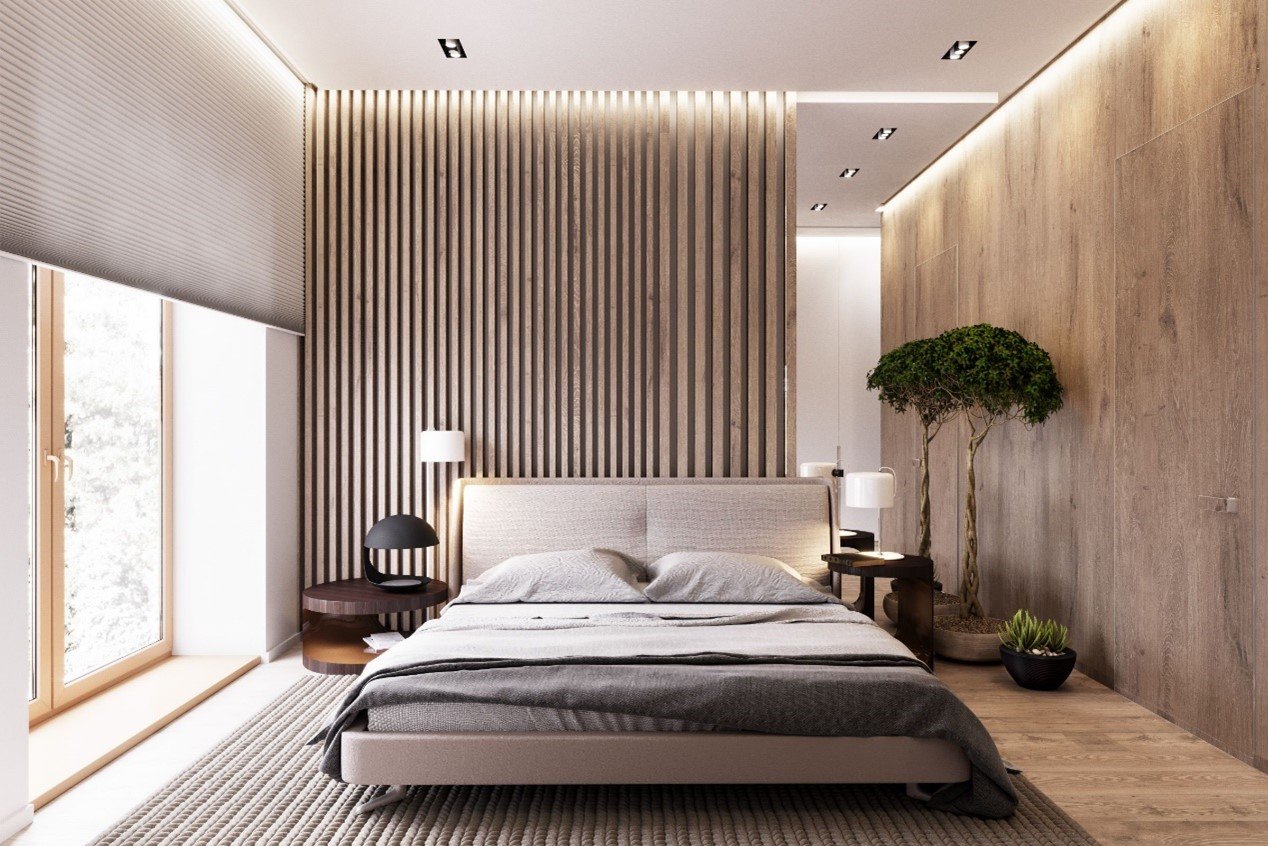
A bedroom is perhaps the most intimate room in any home, yet it often receives the least thoughtful interior finishing. Paint fades, wallpaper peels, and solid wood panelling collects dust and harbours termites. By contrast, WPC wall panels for bedrooms combine the warmth of timber with the practicality of engineered composites, delivering a finished look that lasts without constant maintenance. Whether you are planning a feature wall behind a bed, updating a guest room, or refinishing a master suite, WPC panels offer a design flexibility and durability that few other materials can match across Pakistan’s climate.
In Karachi, where humidity is persistent, or Lahore, where monsoon seasons test every wall finish, WPC panels have become the material of choice for homeowners who want a room that looks as good in year five as it does on installation day. Unlike paint, which needs recoating every few years, or solid wood, which requires regular sealing and attracts termites, WPC panels are built to resist moisture, resist pests, and maintain their appearance with minimal effort. This guide walks through the design considerations, installation approach, and practical benefits specific to bedroom use, backed by real examples from homes across Pakistan.
Quick Answer
WPC wall panels are an engineered wood composite solution specifically suited to Pakistani bedrooms. They combine moisture resistance, pest resistance, low maintenance, and design flexibility, making them ideal for feature walls, full-room finishes, and humid environments. Priced from PKR 1,900 per panel, they typically outlast paint, wallpaper, and even solid wood in most residential applications.
Table of Contents
- Why WPC Wall Panels Work Particularly Well in Bedrooms
- Moisture and Temperature Control
- Design Options and Colour Selection for Bedrooms
- Feature Wall Ideas Across Room Sizes
- Installation Guide for Bedroom Walls
- Maintenance and Long-Term Care
- Budget Considerations and Cost Breakdown
- WPC vs Paint, Wallpaper, and Solid Wood
- Recommendations by Pakistani City
- Frequently Asked Questions
- Conclusion
1. Why WPC Wall Panels Work Particularly Well in Bedrooms
Bedrooms demand a different approach to wall finishing than kitchens or bathrooms. The focus is not primarily on splash resistance or heavy-traffic durability, but rather on creating a calm, visually appealing space that maintains its appearance without requiring attention. A bedroom wall should be a backdrop to rest, not a source of maintenance stress.
This is where WPC panels deliver particular value. Unlike paint, which shows dust and marks easily and needs touching up frequently, WPC panels develop a subtle patina that often looks better as it ages slightly. Dust sits on the embossed grain rather than marking the smooth surface, making the room easier to keep looking fresh. Similarly, the thermal properties of composite materials mean that a WPC-panelled wall does not feel cold to the touch the way ceramic tiles do, making the room feel warmer and more inviting, a quality that matters considerably in Islamabad and Rawalpindi bedrooms during winter months.
The Bedroom-Specific Benefits
Beyond the general advantages shared with other rooms, bedrooms gain specific benefits from WPC panelling. First, sound dampening is measurable. The composite core and batten system behind WPC panels absorb and disperse sound better than flat painted plaster, which means traffic noise from adjoining rooms or outside streets has less impact on sleep quality. For homes in noisier Karachi and Lahore neighbourhoods, this is a genuine practical advantage.
Second, WPC panels create a sense of visual depth and sophistication that paint simply cannot match. A feature wall behind a bed draws the eye and defines the room without overwhelming it. Importantly, that visual impact is not dependent on a bright accent colour or elaborate pattern. Even a subtle warm wood tone like Honey Cedar or Golden Oak reads as deliberate and curated, which is the hallmark of a well-finished bedroom.
Third, WPC panels work particularly well in smaller bedrooms, a common situation in Pakistani urban properties. In a room that feels cramped, painted walls often make the space feel boxed in, particularly if the colour is dark. WPC panels, especially in lighter tones, maintain a sense of scale without making the room feel cold the way bare plaster or glossy tiles do.
2. Moisture and Temperature Control
Pakistani bedrooms face real environmental challenges that traditional wall finishes struggle to handle. Whether in Karachi’s sustained high humidity or the rapid humidity swings in northern cities, bedroom walls absorb ambient moisture, which causes paint to bubble, plaster to develop damp patches, and solid wood to warp. Synthetic materials like wallpaper simply peel away.
WPC panels are engineered to resist all of these problems. The polymer matrix surrounding the wood fibre encapsulates each element, preventing moisture penetration entirely. Consequently, the panel’s dimensions do not change as humidity fluctuates, which means the panel edges stay tight, the finish stays flush against the wall, and the visual quality remains consistent year after year.
Specific Climate Considerations
Coastal Cities (Karachi, Hyderabad): High sustained humidity and salt air can damage most wall finishes. Painted walls show persistent damp stains and peeling, particularly on north-facing walls that receive less direct sunlight. WPC panels remain unaffected. The salt-laden air also accelerates rust on metal fixtures, but does not compromise the polymer or wood fibre encased within the panel itself.
Monsoon-Affected Areas (Lahore, Faisalabad, Peshawar): During monsoon season, humidity spikes dramatically for extended periods. Paint absorbs this moisture, leading to visible swelling of the plaster substrate, which shows as damp patches even on interior walls. WPC does not absorb moisture, so the room stays visually and structurally stable throughout the monsoon period.
Drier Northern Cities (Islamabad, Rawalpindi): Whilst humidity is lower, the winter temperature swings are pronounced. Solid wood panelling expands and contracts with these changes, eventually showing cracks and gaps. WPC panels, by contrast, are engineered to handle temperature variation without visible distortion, which is one reason the material has become increasingly popular in elite residential areas of Islamabad.
Thermal Comfort
WPC panels are also a better thermal performer than many alternatives. The composite material and the air gap behind the panel installation create a subtle insulating effect, which means the wall feels warmer to the touch than a bare plaster or tiled surface. In winter, this contributes to the room feeling more comfortable without increasing heating costs. In summer, the material does not absorb and re-radiate heat the way some painted or tiled surfaces do.
3. Design Options and Colour Selection for Bedrooms
The Sky Panels WPC collection offers 16 distinct designs, each engineered to suit different bedroom aesthetics and existing décor. Unlike paint, where colour selection is essentially unlimited but where achieving a sophisticated finish requires careful consideration of undertones and lighting, WPC panels come pre-finished with UV-protected colouration that remains consistent across the sample, the factory production, and your bedroom wall.
Warm Tones for Traditional and Transitional Bedrooms
For bedrooms with traditional or transitional décor (think mid-toned wooden furniture, warm textiles, and perhaps brass or bronze lighting fixtures), warm wood tones work particularly well. Amber Walnut and Royal Teak are consistently requested by interior designers in Lahore and Islamabad for master bedrooms in period homes. Both tones sit harmoniously with mid-brown wooden furniture without competing for visual attention. These designs also pair naturally with vintage or antique rugs, which remain popular in Pakistani homes.
Honey Cedar suits lighter transitional schemes. It works particularly well behind a bed with cream or off-white upholstery, where it provides visual grounding without appearing heavy. The soft amber undertone also complements brass and gold-toned metal fixtures, which are common in contemporary Pakistani bedroom styling.
Deep Tones for Modern and Dramatic Schemes
For bedrooms designed around a more contemporary aesthetic, or where a dramatic feature wall is the goal, darker options perform exceptionally well. Walnut Crest and Midnight Ash make striking feature walls, particularly when paired with light bedding and minimalist furniture. These designs suit modern master bedrooms in urban Karachi and Lahore homes, where the goal is to create a sense of drama and sophistication in a compact space.
The key insight: deep tones make a room feel smaller and more intimate, which can be a positive design choice if the bedroom is large. In smaller bedrooms, however, a deep-toned feature wall works only if the rest of the room stays relatively bright and minimal. If you are considering Shadow Oak or Espresso Line for a small bedroom, pair it with white walls on the other three sides, bright bedding, and avoid dark furniture.
Light Tones for Bright and Airy Bedrooms
Ivory Pine and Frost Timber are the practical choice for smaller bedrooms or rooms that receive limited natural light. These finishes work particularly well in Karachi and Lahore properties where bedrooms are often interior rooms without external windows. The near-white tone reflects available light, making the space feel larger and brighter.
Lighter tones also suit contemporary Scandinavian-influenced interiors, increasingly popular among younger homeowners in Pakistani cities. The clean, minimal aesthetic of light wood combined with white or off-white bedding, simple metal fixtures, and perhaps a single colourful textile creates a sophisticated, restful bedroom that feels neither dated nor trendy.
Curved Panels for Architectural Interest
For larger bedrooms or rooms with architectural features like columns or curved partition walls, the curved WPC panel options offer sculptural possibility. These are less commonly used in bedrooms than in commercial spaces, but a curved panel behind a bed can create a stunning focal point. Curved panels are made to order, so budget additional time and confirm pricing with Sky Build Mart before committing.
4. Feature Wall Ideas Across Room Sizes
Where you install WPC panels in a bedroom depends on room size, natural light, and the existing furniture layout. A poorly positioned feature wall can throw off the room’s visual balance, whilst a well-considered installation draws the eye and enhances the entire space.
Small Bedrooms (120–180 sq. ft.)
In smaller rooms-the typical situation in Pakistani urban properties-install the panel behind the bed headboard rather than across an entire wall. This accomplishes two things. First, it creates a focal point that visually defines the room without overwhelming it. Second, it reduces material cost and installation time since you are not panelling the entire wall height and width. A typical small bedroom headwall requires approximately 8–12 panels depending on the wall dimensions, translating to roughly PKR 16,000–24,000 in material cost.
If the room has a window, avoid panelling the wall with the window, as this reduces the psychological sense of light and openness. Instead, panel the wall opposite the window, or the wall behind the bed if the bed is not positioned against the windowed wall.
Medium Bedrooms (180–280 sq. ft.)
For a medium-sized bedroom, you have more flexibility. A full-wall installation behind the bed is a classic choice, particularly if the bed is positioned against the wall naturally. Alternatively, you can panel three-quarters of one wall, leaving a border of painted plaster at the top or bottom, which creates visual interest and reduces material cost.
Another option is to panel two walls at right angles-the wall behind the bed and one adjacent wall-which creates a sense of enclosure and visual richness without panelling the entire room. This approach works particularly well with lighter panel colours, which read as intentional rather than overwhelming.
Large Master Bedrooms (280+ sq. ft.)
In larger master suites, full-room panelling becomes a realistic option, particularly if the room contains a sitting area or other functional zones. Alternatively, panel an accent wall behind the bed and continue the panelling onto the two adjacent walls, creating a partial room envelope that defines the sleeping area within the larger space. This approach is increasingly popular in luxury homes in Islamabad and northern Karachi.
If the master bedroom has an ensuite bathroom or dressing area, consider panelling those spaces as well for visual continuity. The same design works across multiple rooms, creating a cohesive interior that feels intentional and complete.
Guest Rooms and Secondary Bedrooms
For guest rooms where you want a polished finish without significant investment, panel just the headwall. This creates a guest room that feels well-designed and considered, rather than a leftover space. Guest rooms are also a good place to experiment with bolder panel colours like Mahogany Luxe, since you do not need to live with the colour daily.
5. Installation Guide for Bedroom Walls
WPC panel installation is straightforward enough that some homeowners undertake it themselves, though professional installation remains the safer choice. Either way, understanding the process helps you schedule the work effectively and avoid common mistakes.
Pre-Installation Preparation
The wall substrate matters. WPC panels can be installed directly over painted plaster, but the surface must be sound, meaning the paint is not peeling and there are no structural cracks or active moisture problems. If you suspect damp, address this before panelling. A damp wall will eventually show through the panels as discolouration.
Clear the room completely. Panelling works best when furniture is removed, allowing clear access to all wall surfaces and electrical outlets. The work generates some dust, so isolate the room from the rest of the home if possible.
Wall Preparation and Batten System
The installer fixes a light timber or metal batten frame to the wall using expansion anchors or wall plugs. This frame creates the structure into which the panels click. The batten spacing is typically 400–500mm apart, which provides sufficient support for the 17mm panels (the standard residential thickness). The 24mm panels, used mainly in commercial settings, need less frequent batten spacing.
Electrical outlets need careful handling. The installer will usually make cuts in the batten framework to accommodate existing switches and sockets, ensuring they remain accessible after panelling. This is one reason professional installation is worthwhile-routing around electrical work requires precision and safety awareness.
Panel Installation Process
Once the batten frame is fixed, installation is rapid. Each panel has a male edge and a female edge, which click together in a tongue-and-groove system. The installer starts at one corner, fixing the first panel directly to the batten frame with fasteners, then clicks each subsequent panel into the previous one. The click-fit edge means there are no visible gaps between panels, creating a seamless finished appearance.
The entire headwall of a typical medium bedroom takes one installer roughly 6–8 hours, meaning the work can usually be completed in a single day. Once panels are installed, the room can be used immediately. Unlike paint, which needs drying time and can smell for days, WPC panels are ready to live with the same day.
Trimming and Finishing
After the main panels are installed, the installer fits trim pieces around edges, doorways, and electrical outlets. Sky Build Mart supplies matching trim, so the finished installation appears cohesive and professional.
One often-overlooked detail: if you are panelling only a feature wall rather than the entire room, the edges of the panelled area need careful finishing. A full-height border of painted plaster on either side of the panel works well visually, or the installer can cap the panel edges with trim pieces for a more formal appearance.
DIY Installation Considerations
If you are considering DIY installation, ensure you have experience with power tools and understand how to work safely with expansion anchors and wall plugs. The main risk is improper batten fastening, which leads to panels that move or eventually pop out. Unless you are confident in your ability to fix a batten frame securely into plaster or block, professional installation is worth the cost.
Professional installers across Karachi, Lahore, and Islamabad typically charge between PKR 100–150 per panel in labour, which translates to PKR 800–1,800 for a small bedroom headwall. Compared to the total project cost of PKR 17,000–26,000 (materials plus labour), the labour percentage is modest, and the quality risk reduction is significant.
6. Maintenance and Long-Term Care
This is perhaps the single biggest advantage of WPC panels in bedrooms. Maintenance is genuinely minimal, which means the room stays looking fresh without regular attention.
Daily and Weekly Care
Regular dusting with a soft microfibre cloth is sufficient for daily care. The embossed grain surface of WPC panels traps dust differently than smooth paint does, meaning dust sits in the texture rather than marking the surface. A quick wipe once a week keeps the wall looking fresh.
Stain Removal
For marks, stains, or fingerprints, a damp cloth with mild detergent is usually sufficient. The UV-protected top coat on Sky Panels boards is sealed at the factory, so it resists most household staining. Do not use harsh chemicals or abrasive scouring pads, as these can damage the finish. For stubborn marks, a soft cloth with a tiny amount of white vinegar works well.
Long-Term Durability
Unlike paint, which fades near windows and needs recoating every few years, WPC panels maintain their colour and finish for the long term. The UV protection in the surface coating prevents fading even in bedrooms with significant natural light. Ten years after installation, a properly maintained WPC panel wall looks nearly identical to the day it was installed.
What to Avoid
Do not use pressure washers, steam cleaners, or excessive water on the panels. Whilst WPC is moisture-resistant, prolonged exposure to water can eventually affect the seals at panel joints. Similarly, do not mount heavy items directly into the panels without anchoring to the batten system behind them. The panels themselves are not load-bearing for shelf installation.
Repair and Replacement
If a panel becomes damaged (cracked or dented), it can be replaced individually. The damaged panel is unclicked from its neighbours and removed, and a new panel is clicked into place. This is considerably easier than repainting a damaged section of paint, which usually requires painting the entire wall to avoid visible touch-up marks.
7. Budget Considerations and Cost Breakdown
Understanding the total cost of a WPC panel bedroom project helps with budgeting and deciding whether to panel the entire room or just a feature wall.
Material Costs
Sky Panels WPC boards are priced at PKR 1,900–2,000 per panel, regardless of design. Each standard panel measures approximately 195mm × 2440mm (width × height), meaning a single panel covers roughly 0.48 square metres. A typical bedroom feature wall of 3 metres wide by 2.4 metres high requires approximately 12–16 panels depending on cuts and waste factor, translating to PKR 22,800–32,000 in material cost.
Delivery across Pakistan is included in most orders, and Sky Build Mart supplies matching trim and fasteners with the panel order, so there are usually no hidden material costs.
Labour Costs
Professional installation typically costs PKR 100–150 per panel in labour. For the same 12–16 panel headwall, labour would be approximately PKR 1,200–2,400. This is notably less expensive than the equivalent labour cost for redecorating with paint and wallpaper over time.
Installation in Karachi and Lahore is typically more expensive than in smaller cities, and rural areas may require travel surcharges. Always get a written quote before committing to a project.
Total Project Cost Example
A 3m × 2.4m bedroom feature wall installed professionally in Lahore would typically cost:
- Materials: PKR 24,000–32,000
- Labour: PKR 1,500–2,000
- Trim and fasteners: Included
- Total: PKR 25,500–34,000
Cost Comparison Over Time
Compare this to the cost of painting the same wall professionally every 3–4 years. Professional interior painting costs approximately PKR 30–50 per square foot, which translates to roughly PKR 15,000–25,000 for a typical bedroom wall. Over ten years, you would repaint 2–3 times, bringing the total cost to PKR 45,000–75,000, plus the disruption and inconvenience of periodic redecorating.
WPC panels, by contrast, cost less upfront and require almost no ongoing expense. If you remain in the home for 5+ years, WPC becomes the economically superior choice.
Payment and Delivery Timeline
Most orders are delivered within 5–7 working days. Installation can typically be scheduled within 1–2 weeks of delivery, depending on installer availability. The entire project from order to completion usually takes 3–4 weeks.
8. WPC vs Paint, Wallpaper, and Solid Wood
When planning a bedroom wall finish, you are typically choosing between four main options: paint, wallpaper, WPC panels, and solid wood. Each has genuine advantages; the question is which matters most for your specific circumstances.
| Factor | Paint | Wallpaper | WPC Panels | Solid Wood |
|---|---|---|---|---|
| Upfront Cost | Very low (PKR 5,000–15,000) | Low to moderate (PKR 10,000–20,000) | Moderate (PKR 25,000–35,000) | High (PKR 50,000–100,000+) |
| Installation Time | 3–5 days (drying time) | 1–2 days | 1 day | 3–5 days |
| Moisture Resistance | Poor | Poor | Excellent | Poor (requires sealing) |
| Pest Resistance | Not applicable | Not applicable | Excellent | Poor (termites) |
| Visual Depth | Flat | Printed texture | Embossed, tactile | Authentic wood grain |
| Maintenance | Repainting every 3–4 years | Difficult to clean; tears easily | Wipe clean only | Periodic sealing and polishing |
| Typical Lifespan | 3–5 years before decline | 5–7 years before peeling | 10+ years, minimal decline | Long-term if maintained |
| Design Flexibility | Unlimited colour choice | Wide pattern variety | 16 designs plus variations | Limited to timber species |
| Temperature Feel | Neutral | Cold surface | Warm surface | Very warm surface |
Paint: Best For Quick, Affordable Updates
Paint remains the cheapest way to finish a bedroom wall if your budget is severely limited or if you are renting and cannot make permanent changes. However, the low upfront cost masks the true lifetime cost. In a humid Pakistani bedroom, a paint finish typically degrades within 3–4 years, requiring repainting. Over ten years, the cumulative cost of paint, labour, and the inconvenience of periodic redecorating typically exceeds the cost of a WPC installation.
Wallpaper: Visual Interest with Durability Limits
Wallpaper offers more visual character than paint, and installation is faster since there is no drying time. However, wallpaper performs poorly in humid environments, particularly around moisture sources like bathrooms or in Karachi’s coastal humidity. The edges begin peeling within a few years, and once peeling starts, the entire roll usually needs replacing. Wallpaper also traps dust and is difficult to clean effectively.
Solid Wood: The Authentic Choice with Practical Drawbacks
Solid wood panelling-typically reclaimed or high-quality hardwood-delivers genuine aesthetic warmth and authenticity that WPC cannot fully replicate. However, it carries significant practical drawbacks for Pakistani bedrooms. First, solid wood is expensive, typically 3–5 times the cost of WPC. Second, it requires regular sealing and polishing to maintain its finish, which is labour-intensive and time-consuming. Third, and most importantly, solid wood in a humid Pakistani bedroom is vulnerable to termite damage, which can be severe and expensive to remediate once it begins.
Unless you are willing to apply termite treatment annually and reseal the wood every 1–2 years, solid wood is a higher-risk choice than WPC in most Pakistani climates.
The WPC Advantage for Bedrooms
WPC panels sit at the sweet spot: they cost more than paint initially, but less than solid wood, and they deliver superior performance to all alternatives in moisture resistance, pest resistance, and low maintenance. For homeowners planning to remain in their home for 5+ years, WPC is the most economically rational choice. For renters or those in temporary situations, paint remains the practical default.
9. Recommendations by Pakistani City
Pakistan’s diverse climate means that the same wall finish does not perform identically everywhere. These city-specific recommendations reflect how WPC panels handle each region’s particular challenges.
Karachi: Humidity and Salt Air
Karachi’s persistently high humidity and salt-laden coastal air are brutal on conventional wall finishes. Paint peels within 2–3 years, wallpaper deteriorates even faster, and solid wood requires aggressive treatment and sealing. WPC panels are almost purpose-built for Karachi. The material resists humidity entirely, and the UV-protected finish resists the effects of salt air and sun exposure. Light tones like Ivory Pine and Ash Stone help bedrooms feel bright and airy in a city where many homes have limited natural light. The moisture resistance also means WPC panels work well in bedrooms adjacent to or near bathrooms, where humidity migrates between rooms.
Lahore: Monsoon Vulnerability
Lahore’s pronounced monsoon season tests wall finishes severely. The weeks of sustained high humidity cause paint bubbling, plaster damp patches, and general deterioration. WPC panels handle the monsoon season without any visible decline. Medium and warm tones work particularly well in Lahore’s traditional homes. Honey Cedar, Heritage Walnut, and Royal Teak pair naturally with Lahore’s traditional carved wooden furniture and antique textiles.
Islamabad and Rawalpindi: Temperature Variation
The northern cities experience more pronounced seasonal temperature swings than Karachi or Lahore. Solid wood panelling expands and contracts with these changes, eventually cracking and warping. WPC panels, engineered to handle thermal variation, remain dimensionally stable year-round. The thermal comfort of WPC (warmer to the touch than paint or tiles) also matters in these cooler cities during winter. Dark tones like Walnut Crest and Midnight Ash suit Islamabad’s contemporary aesthetic and work particularly well in larger master bedrooms where they create a sense of sophisticated enclosure.
Faisalabad, Multan, and Central Punjab
These cities experience moderate humidity and temperature variation, lying between the extremes of Karachi and Islamabad. WPC panels perform reliably in all conditions. Medium wood tones like Amber Walnut and Shadow Drift suit the transitional aesthetic common in these regions, where traditional and contemporary design elements coexist.
Peshawar and KP Region
The KP region experiences dry heat and dust, which creates a different set of challenges from coastal humidity. Dust accumulation is more visible on flat surfaces like paint, but the embossed grain of WPC panels makes dust less noticeable. WPC panels also resist the UV exposure typical of the region’s intense sunlight without fading, which is a genuine advantage over paint and cheaper wallpaper options.
Ready to Transform Your Bedroom?
Browse the complete Sky Panels WPC wall panel collection to explore all 16 designs, request free samples, or contact Sky Build Mart for a quotation and professional installation advice specific to your bedroom and city.
10. Frequently Asked Questions
Conclusion
A bedroom is where you spend roughly one-third of your life. The wall finish deserves the same consideration as the flooring, lighting, and furniture. WPC wall panels combine visual sophistication with practical performance in a way that few alternative materials can match, particularly across Pakistan’s varied climates.
Whether you are in Karachi managing persistent humidity, Lahore navigating monsoon season, or Islamabad dealing with temperature swings, WPC panels deliver consistent performance without requiring ongoing maintenance or periodic redecorating. The 16-design collection from Sky Panels offers genuine choice across warm, dark, and light tones, meaning you can select a finish that genuinely suits your bedroom aesthetic rather than making compromises based on practical constraints.
For homeowners planning to remain in their home for 5+ years, WPC wall panels represent the most economically rational choice-lower lifetime cost than paint when maintenance is factored in, more durable than wallpaper, more practical than solid wood in humid environments, and considerably more sophisticated than flat paint at the end result.
The installation is fast, requiring only a single day for most feature walls, and the result is a finished room that looks as good in year five as it does on installation day. If you are tired of repainting damp-stained walls every few years, or if you simply want a bedroom that feels genuinely finished and considered, WPC wall panels are worth exploring.
Start by ordering free samples of your preferred designs, viewing them in your actual bedroom lighting, and then contacting Sky Build Mart for a quotation and professional installation advice specific to your space and city. The result will be a bedroom that works harder, looks better, and costs less to maintain than almost any alternative.
Sky Build Mart is Pakistan’s leading supplier of WPC wall panels, UV marble sheets, and premium interior finishing materials. Having supplied hundreds of installations across Karachi, Lahore, Islamabad, and other major cities, the team brings genuine expertise in material selection, climate-specific recommendations, and installation quality. This guide draws on that practical experience and a direct understanding of how wall finishes perform across Pakistan’s diverse environments.
