Buying guide
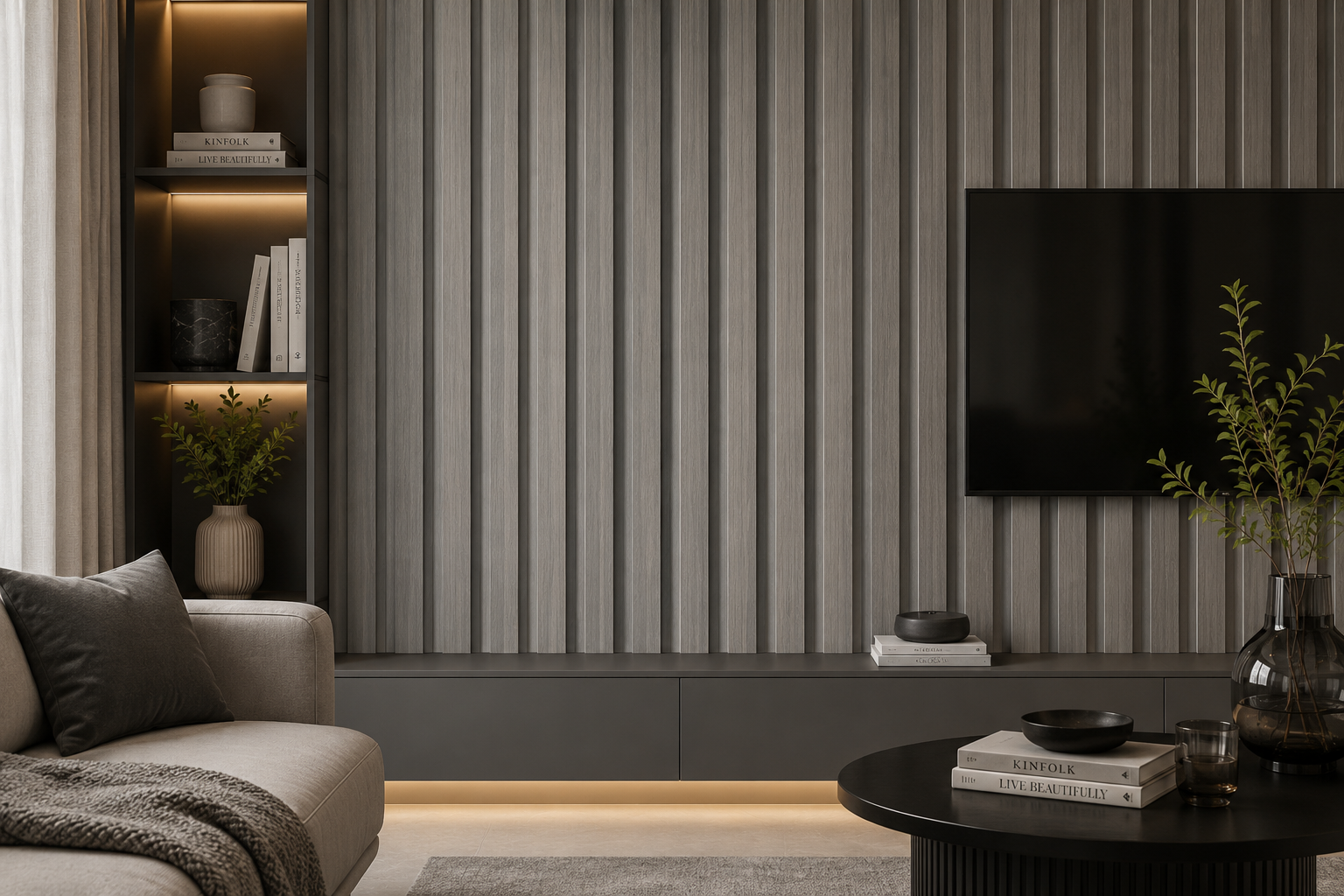
Choosing between 17mm vs 24mm WPC wall panels is the first decision most buyers face, and it changes how the finished wall looks more than the colour does. The thicker panel gives deeper grooves and stronger shadows. The thinner panel sits closer to the wall and suits smaller rooms. Neither is better in every case.
Browse WPC wall panelsThis guide compares the two thicknesses on look, room size, cost, fitting, cleaning and durability, and tells you which to choose for TV walls, bedrooms, offices and shops across Karachi and Pakistan. Sky Build Mart stocks six 17mm designs and eleven 24mm designs, all 9.5 ft (2900 mm) long.
What does the thickness actually mean?
The figure is the depth of the panel from the wall surface to the front face of the ribs. A 24mm panel stands 7mm further into the room than a 17mm panel, and that extra depth is what creates deeper grooves and longer shadows.
Both are WPC, wood plastic composite, with the same moisture resistance, the same wipe-clean surface and the same 9.5 ft length. The difference is purely in the profile. Browse the 17mm WPC wall panels and 24mm WPC wall panels to compare the designs.
17mm vs 24mm WPC wall panels: the quick comparison
| Feature | 17mm WPC panels | 24mm WPC panels |
|---|---|---|
| Shadow and depth | Softer, calmer grooves | Deep grooves, strong shadows |
| Best room size | Small to medium rooms, corridors | Medium to large rooms |
| Depth into the room | Slimmer, better near doors and furniture | Stands further out, check door frames |
| Hides uneven plaster | Reasonably well | Very well |
| LED strip effect | Gentle glow | Dramatic shadow play |
| Dust in grooves | Less | More, grooves are deeper |
| Designs available | 6 | 11, including Amber Walnut, Golden Oak, Honey Cedar, Ivory Pine, Frost Timber and Black Slatted |
| Typical uses | Bedrooms, corridors, offices, small lounges | TV walls, statement walls, receptions, restaurants |
Choose 17mm WPC wall panels when
- The room is small or narrow. A 24mm panel can feel heavy in a 10 by 12 ft bedroom. The 17mm profile adds texture without crowding the space.
- Furniture sits against the wall. Wardrobes, bed frames and sofas sit closer to a slimmer panel.
- Door and window frames are shallow. A thick panel can stand proud of a frame and need extra trim. Check the frame depth first.
- You want calm rather than drama. Bedrooms, studies and corridors often suit the softer shadow.
- Cleaning time matters. Shallower grooves hold less Karachi dust.
Choose 24mm WPC wall panels when
- The wall is a statement. TV walls, reception walls and restaurant feature walls benefit from deep shadow.
- You are adding LED lighting. A warm strip above a 24mm wall creates the dramatic ribbed shadows seen in showroom photos.
- The plaster is uneven. Deeper profiles hide more.
- The room is large. In a big lounge or lobby, a 17mm panel can look flat from across the room.
- You want the widest choice of finishes. The 24mm range has eleven designs.
Cost and quantity
Thicker panels use more material and are usually priced higher per panel. The number of panels you need depends on the cover width, which varies by design, not on thickness. Divide your wall width by the cover width on the product page, round up and add 5 to 10 percent for cutting. Check current prices on the product pages, because they change.
Remember trims, adhesive or battens and labour when you compare. A thicker panel also needs slightly deeper end caps and corner trims, so order trims that match the thickness you choose.
Fitting differences
Both thicknesses are glued to a flat, dry wall or fixed to battens, and both take about a day for a typical feature wall. A few practical points differ.
- Door and window reveals. Measure the depth of frames and architraves. A 24mm panel plus battens can stand proud of a shallow frame and need an extra trim.
- Switches and sockets. Deeper panels may need box extenders so that switch plates sit flush on the panel face. Your electrician can supply these.
- Expansion gaps. Both need a few millimetres at top and bottom, covered by skirting or trim.
- TV brackets. On either thickness, fix the bracket through the panel into masonry or a batten, never into the panel alone.
Our WPC wall panels explained guide covers fitting in more depth.
Karachi conditions and care
Both thicknesses handle humid air well and both need a dry wall underneath. Check for damp, fix the source and let the wall dry before fitting. Keep panels away from heat. For cleaning, run a soft brush or vacuum attachment along the grooves weekly, more often for 24mm panels near windows where dust collects. Wipe marks with a damp cloth and mild soap. See our cleaning guide.
Still unsure? A simple rule
If you will light the wall and look at it from across a large room, choose 24mm. If the wall is in a bedroom, corridor or small lounge, or furniture sits against it, choose 17mm. If you are torn, send us a daylight photo of the wall with its width and height and we will advise.
17mm vs 24mm WPC wall panels room by room
If you prefer a straight answer for each room, this is how we would usually advise a customer comparing 17mm vs 24mm WPC wall panels.
- Living room TV wall. 24mm, lit from above with a warm LED strip. In a small lounge under about 12 ft wide, 17mm.
- Master bedroom. Either. 24mm behind a large headboard in a big room, 17mm where the bed fills the wall.
- Children and guest bedrooms. 17mm, in a light finish.
- Dining room. 24mm on one wall for evening drama, or 17mm if chairs touch the wall.
- Corridors and staircases. 17mm. It stays out of the way and holds less dust.
- Home office. 17mm for a calm video-call background. 24mm if the wall is large and you want impact.
- Office reception. 24mm, lit, behind the desk.
- Shops and showrooms. 24mm on the entrance feature wall, 17mm or flat panels on display walls where stock sits close.
- Restaurants and cafes. 24mm on the photo wall, 17mm behind seating where chair backs touch.
Whichever side of the 17mm vs 24mm WPC wall panels decision you land on, order every panel for one wall from the same batch and keep one spare.
Frequently Asked Questions
Is 24mm better quality than 17mm?
No. Both are the same WPC material with the same durability. The difference is the depth of the profile, which changes the look, not the quality.
Which thickness is best for a TV wall?
Most TV walls use 24mm for the deeper shadows, especially with LED lighting. In a small lounge, 17mm keeps the wall from feeling heavy.
Which thickness is best for a bedroom?
17mm suits most bedrooms, where the bed sits against the wall and a calmer texture is more restful. Large master bedrooms can carry 24mm behind the headboard.
Do 17mm and 24mm panels cost the same?
Thicker panels are usually priced higher because they use more material. Check the product pages for current prices and compare using the cover width to work out the cost per wall.
Can I mix 17mm and 24mm panels on one wall?
It is possible for a stepped effect, but the junction needs careful trimming. Most people choose one thickness per wall for a clean finish.
Are both thicknesses 9.5 ft long?
Yes. Every Sky Build Mart WPC panel is 9.5 ft (2900 mm) long, which covers most Pakistani ceiling heights in one piece.
