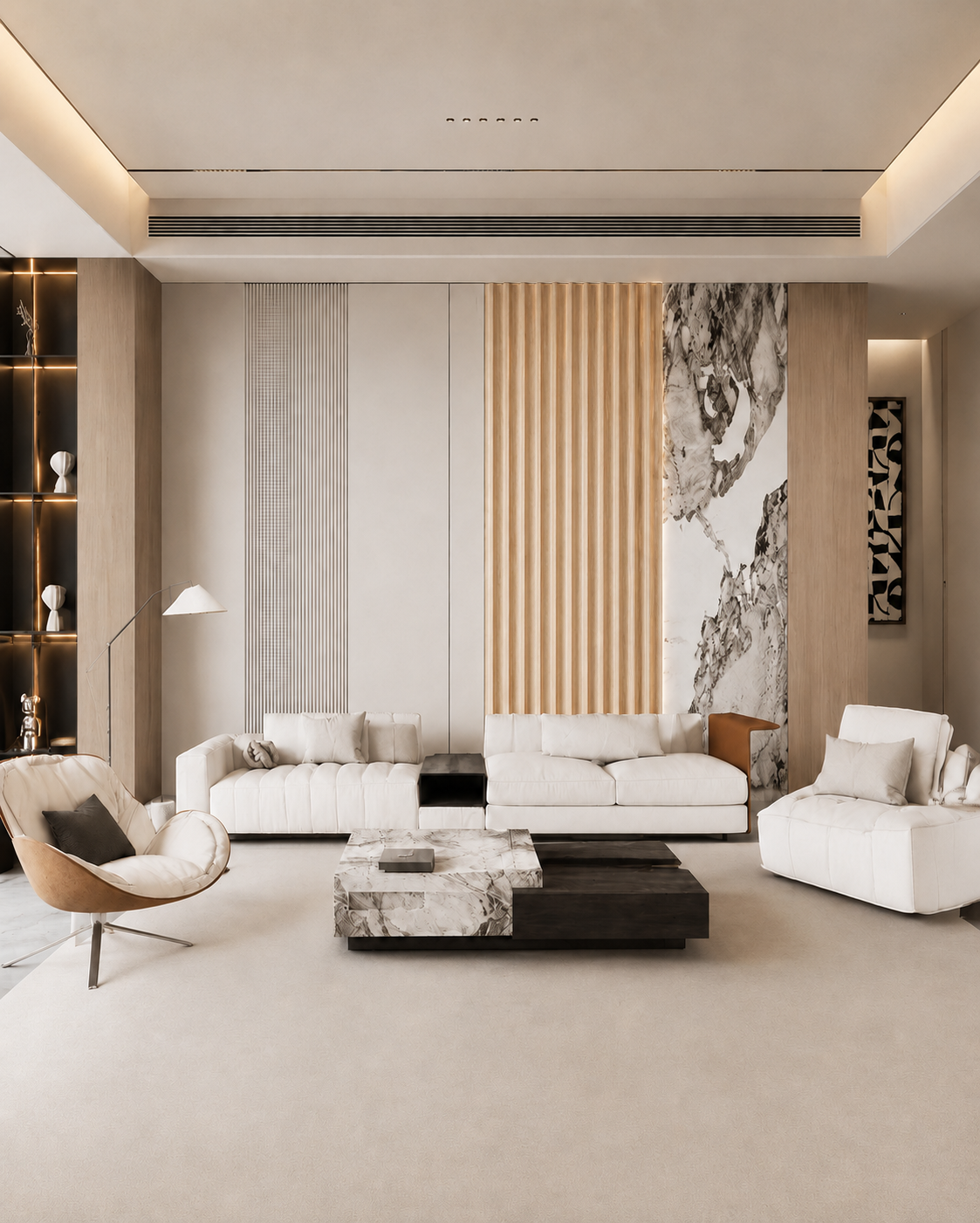
Walls take more punishment than almost any surface in a home. Yet they usually get the least thought. Paint chips. Wallpaper peels at the seams. Plaster cracks with the seasons. If you have ever repainted a lounge wall only to see damp patches return within a year, you know the feeling. This is exactly why homeowners across Pakistan are switching to WPC wall panels.
WPC, or Wood Plastic Composite, panelling has moved from a niche choice to one of the most requested wall finishes in the country. Homes, offices, and shops all use it now. It looks like timber and installs faster than traditional carpentry. It also shrugs off the humidity and heat that make conventional wood panelling a risky investment in most Pakistani cities.
This guide walks through everything you need to know before choosing WPC wall panels for your own space. We explain what the material is, how the 17mm and 24mm ranges differ, and where curved panels make sense. We also cover installation and long term care. Throughout, we reference the specific panels available at Sky Build Mart so you see real options rather than abstract descriptions.
Table of Contents
- What Are WPC Wall Panels?
- Why WPC Wall Panels Suit Pakistani Homes and Climate
- Thickness Explained: 17mm vs 24mm WPC Panels
- The 17mm WPC Wall Panel Collection
- The 24mm WPC Wall Panel Collection
- Curved WPC Wall Panels for Feature Walls
- Room by Room Guide to Using WPC Panels
- How WPC Wall Panels Are Installed
- Cleaning and Maintaining WPC Panels
- WPC Panels Compared to Paint, Wallpaper, and Tiles
- Popular WPC Panel Design Trends
- Cost Considerations and Long Term Value
- How to Choose the Right WPC Panel
- Frequently Asked Questions
- Final Thoughts
What Are WPC Wall Panels?
WPC stands for Wood Plastic Composite. Manufacturers combine wood fibre or wood flour with plastic polymers, typically PVC or PE, along with bonding agents. Heat and pressure hold the mixture together. The result is a rigid board that carries the warm, grained look of real timber, without timber’s usual weaknesses.
Unlike solid wood, WPC does not rely on a natural grain structure. That structure is exactly what splits, warps, or rots when it meets moisture. The plastic component seals the wood fibres inside. This lets the panel resist water far better than plywood, MDF, or solid timber cladding. That single trait explains why WPC panelling has become the practical choice for interior walls in regions where humidity swings widely between seasons.
How Manufacturers Make WPC Panels
Producers extrude the wood plastic mixture into flat sheets under controlled heat. They press a decorative surface layer onto the board. They finish the edges with a tongue and groove or click fit profile. This process gives every panel from the same product line a matching colour and texture, something natural wood cannot guarantee.
Because manufacturers apply a printed or laminated wood grain surface, panels replicate the look of oak, walnut, teak, and ash. Two boards from the same batch, whether Golden Oak or Midnight Ash, look identical to each other. That consistency gives a wall a uniform, professionally finished appearance even before installation begins.
Why WPC Wall Panels Suit Pakistani Homes and Climate
Pakistan’s climate is demanding on building materials. Coastal cities like Karachi carry constant humidity. Lahore and Islamabad see hot, dust heavy summers followed by damp winters. Many homes across the country also deal with seasonal termite activity. Traditional wood panelling struggles against all three conditions at once.
WPC panels handle humidity well. The plastic content in the composite stops water from soaking into the board the way it would with raw timber. This matters most in bathrooms, kitchens, and ground floor rooms, where moisture from the air or nearby plumbing tends to collect against walls.
Termites worry anyone who has invested in solid wood fittings. WPC contains a high percentage of plastic polymer rather than pure organic wood fibre. It does not offer termites the same food source as natural timber. That single fact has pushed many homeowners, who once avoided wood finishes altogether, to reconsider panelling.
Heat is the third factor. Direct sun through windows can cause some finishes to fade or warp over time. Manufacturers build quality WPC panels to resist UV related discolouration far better than raw wood veneers. This keeps a feature wall looking consistent even in rooms that catch strong afternoon light.
There is also a practical construction reason WPC has become popular. Renovation projects in occupied homes need speed and low mess. WPC panels click or screw into place over battens, skipping the extended drying, sanding, and varnishing that solid wood carpentry demands. A wall that might take a week in timber can often finish in a single day with panelling.
Thickness Explained: 17mm vs 24mm WPC Panels
One of the first decisions when browsing WPC wall panels is thickness. Sky Build Mart stocks two primary thicknesses, 17mm and 24mm. The difference between them means more than a number on a spec sheet.
The 17mm range offers the slimmer profile. Choose it when you want the panelled look without adding much depth to the room. This thickness suits bedrooms, corridors, and smaller rooms, where every centimetre of floor space matters. It also covers large wall areas cost effectively. Thinner boards use less raw material per square metre, yet still deliver the full aesthetic benefit of the wood grain finish.
The 24mm range is the heavier, more substantial option. The added thickness gives the panel greater rigidity and a stronger three dimensional presence on the wall. This shows most clearly on panels with grooved or fluted detailing. Many homeowners pick 24mm panels specifically for feature walls, television backdrops, and reception areas. In these spots, the panel needs to make a design statement rather than sit in the background.
Durability matters here too. Thicker boards resist minor impacts and pressure better than thinner ones. This makes 24mm panels a strong option for busy areas such as hallways, staircases, or commercial spaces. Foot traffic and incidental contact happen more often in these spots.
Neither thickness beats the other in every situation. The right choice depends on the wall’s role in the room and your budget per square metre. It also depends on whether you want the panel to sit subtly in the background or announce itself as the focal point.
The 17mm WPC Wall Panel Collection
Sky Build Mart’s 17mm WPC Wall Panel range builds on warm and neutral wood tones. These suit bedrooms, living rooms, and spaces that call for a lighter panel profile. Each panel in this collection sits under the 17mm Thickness and WPC Wall Panel categories on the site.
Cooler and Lighter Finishes
The Ash Stone WPC Wall Panel carries a cool, muted grain. It pairs naturally with contemporary grey and white colour schemes, making it a strong choice for minimalist interiors.
The Oak Crest WPC Wall Panel uses a lighter oak finish that reflects more light in the room. This makes it useful for spaces with limited natural daylight.
The Shadow Oak WPC Wall Panel combines oak grain detailing with deeper shadow lines running through the surface. It adds a subtle sense of depth even at the slimmer 17mm profile.
Warmer and Textured Finishes
The Espresso Line WPC Wall Panel leans darker. Its rich coffee brown tone suits dining rooms and studies where you want a more grounded, formal atmosphere.
The Heritage Walnut WPC Wall Panel brings a classic walnut grain with visible texture variation. It gives walls a traditional, established character without the cost of real walnut cladding.
The Walnut Ridge WPC Wall Panel features a ridged, textured surface that catches light differently depending on the angle. It adds visual interest to otherwise flat walls.
Across this range, proportion is the shared advantage. The panels sit flush and slim against the wall. They suit rooms where you want warmth and texture without letting the panelling dominate the space.
The 24mm WPC Wall Panel Collection
The 24mm range holds Sky Build Mart’s most striking finishes, filed under the 24mm Thickness and WPC Wall Panel categories. These panels suit walls that need to carry real visual weight. That could be a living room backdrop or a reception wall in a commercial fit-out.
Bright and Warm Tones
The Amber Walnut WPC Wall Panel delivers a warm amber toned walnut grain. It works particularly well under warm LED lighting, which amplifies the golden undertones in the finish.
The Golden Oak WPC Wall Panel offers a bright, sunlit oak tone. It brings warmth to rooms that might otherwise feel clinical, such as home offices with a lot of white or grey furniture.
The Honey Cedar WPC Wall Panel replicates cedar’s reddish brown grain. Designers often associate this finish with cabin and lodge style interiors, now achievable without the upkeep real cedar demands.
The Ivory Pine WPC Wall Panel is one of the lightest options in the entire range. It suits small rooms or spaces where you want panelling without darkening the walls.
Deeper and Bolder Tones
The Frost Timber WPC Wall Panel takes a cooler, greyed out timber look. It suits modern interiors that lean towards Scandinavian or industrial styling.
The Mahogany Luxe WPC Wall Panel presents a deep, formal mahogany grain. Homeowners often choose it for studies, libraries, and executive offices that call for a traditional, premium look.
The Midnight Ash WPC Wall Panel is the darkest panel in the collection. Its near charcoal finish works exceptionally well as a television feature wall, since dark backdrops tend to make screens appear sharper.
The Royal Teak WPC Wall Panel reproduces teak’s straight grain lines. Designers have long associated this finish with quality furniture, and it is now available at panel scale for full walls.
The Shadow Drift WPC Wall Panel mixes light and dark grain streaks through the same board. Each panel ends up with a slightly one of a kind appearance, despite consistent manufacturing standards.
The Walnut Crest WPC Wall Panel rounds out the range with a bold walnut grain and a raised crest style texture. The surface reads as tactile and dimensional, even from a distance.
Curved WPC Wall Panels for Feature Walls
Flat panelling covers most needs, but some design briefs call for movement and softness rather than straight lines. Sky Build Mart’s Curved WPC Wall Panels answer that need, listed under the Curved WPC Wall Panels category alongside the standard WPC Wall Panel classification.
What Makes Curved Panels Different
Manufacturers engineer curved panels to bend along a fixed radius. This lets them wrap around columns, form arched doorways, or build a sculpted feature wall that a flat board simply cannot achieve. They have become particularly popular for reception desks, hotel lobbies, and statement bedheads, where the curve itself becomes part of the room’s design language.
The Natural Oak WPC Curved Wall Panel offers a soft, natural oak grain. It suits residential settings looking for a gentler curve without a heavy visual statement.
The Teak WPC Curved Wall Panel brings the same rich teak grain found in the flat range into a curved form. It works well when you want a consistent timber theme across straight and curved sections in one project.
The Walnut WPC Curved Wall Panel pairs a deeper walnut tone with the curved profile. Designers often specify it for commercial reception counters that need a premium, grounded finish.
The White Oak WPC Curved Wall Panel is the lightest option in the curved range. It suits bright interiors and spaces where the curve needs to soften a room without darkening it.
Curved panels are a specialised product. Discuss your exact radius and application with the Sky Build Mart team before ordering. Curved sections need a different installation approach than standard flat panelling.
Room by Room Guide to Using WPC Panels
Choosing a panel finish becomes easier once you think about the specific room and its demands.
Living Areas and Bedrooms
Living rooms. Television feature walls are one of the most common uses for WPC panelling. Darker 24mm tones such as Midnight Ash or Amber Walnut create strong contrast behind a screen. Lighter finishes like Golden Oak or Ivory Pine work well if the room already has darker furniture. They balance the palette rather than adding to it.
Bedrooms. A panelled bedhead wall has become one of the most requested features in new bedroom fit outs. The 17mm range suits bedrooms particularly well, since the slimmer profile keeps the room feeling open while still giving a textured, hotel style backdrop.
Work and Wet Areas
Home offices and studies. Mahogany Luxe and Royal Teak bring a formal, focused atmosphere that suits a workspace, especially when paired with warm task lighting.
Kitchens. Homeowners increasingly use WPC panels behind dining areas and breakfast counters, where moisture resistance matters more than in a typical living space. Lighter tones tend to work best here, since kitchens generally benefit from brighter, easier to maintain surfaces.
Bathrooms. Tiling remains the standard for wet zones directly around showers. WPC panelling is a strong option for the drier sections of a bathroom, though, such as around a vanity or mirror wall, where you want a warmer material than tile.
High Traffic and Commercial Areas
Hallways and staircases. These count among the highest traffic areas in any home. Bags brush against walls, furniture gets carried through, and daily wear adds up. The added rigidity of the 24mm range makes sense here. A mid tone finish such as Oak Crest or Heritage Walnut tends to hide minor scuffs better than very light or very dark colours.
Commercial spaces. Reception areas, boutique retail interiors, and restaurant walls frequently use the 24mm range or curved panels to create a premium first impression. These spaces need a finish that looks considered and holds up under constant footfall.
How WPC Wall Panels Are Installed
Installation is one of the strongest arguments for WPC panelling over traditional wood carpentry. Here is how the process typically runs.
Preparing the Wall
Installers first check the wall surface for level and clean away dust, loose plaster, or old adhesive. They correct any significant unevenness before panelling begins, since panels need a flat base to sit correctly.
Next, they fix a batten framework, usually timber or metal strips, to the wall at set intervals. This framework creates the mounting surface for the panels. It also leaves a small air gap between the panel and the wall. This gap helps ventilation and reduces the chance of trapped moisture behind the panelling.
Fitting and Finishing
Installers cut the panels to size, accounting for doors, windows, sockets, and switches. They fix each panel to the battens using a combination of adhesive and concealed fixings. Most modern WPC panels use a tongue and groove or click fit edge system. This lets adjacent boards lock together with a tight, near invisible seam.
Finally, installers add trim pieces and edge profiles at corners and transitions to give the wall a finished, professional look. A skilled installer can typically panel a standard sized room wall within a day. That is a fraction of the time that painting, plastering, and drying cycles usually take.
Planning a DIY installation? Curved panels and larger commercial projects generally benefit from professional fitting. They need precision to keep curves consistent and joins seamless across large wall areas.
Cleaning and Maintaining WPC Panels
One underrated advantage of WPC wall panels is how little ongoing maintenance they need compared with painted plaster or wallpaper.
For routine cleaning, a dry microfibre cloth or soft duster usually removes surface dust. For marks or light staining, use a cloth lightly dampened with water and a mild, non-abrasive cleaner. Avoid harsh chemical cleaners, abrasive scouring pads, and excessive water, since these can dull the printed wood grain finish over time.
The panels resist moisture absorption far better than raw timber. That means you never need to seal, varnish, or repaint them. This is one of the main reasons WPC has become a popular, low maintenance alternative to real wood cladding.
If a single panel gets damaged, you are not stuck. Most click fit or tongue and groove systems let you replace that one section without disturbing the panels around it. This is a real practical advantage over solid plaster walls, where localised damage often means repainting an entire wall just to match the colour.
WPC Panels Compared to Paint, Wallpaper, and Tiles
It helps to see WPC panelling next to the alternatives most people actually choose between.
Paint costs the least upfront and offers unlimited colour choice. But it shows scuffs, fingerprints, and damp staining more readily than panelling, and it needs repainting every few years to stay looking fresh.
Wallpaper can achieve a similarly textured, decorative look. Seams tend to lift in humid conditions, though, and replacing damaged sections usually means re-papering the whole wall rather than a single area.
Tiles work well in wet zones and offer strong durability. They read as cold and hard in living spaces, though, and lack the warmth of a wood effect finish. Installation also takes longer and creates more mess than panelling.
WPC wall panels sit between these options. They offer the warmth of a wood finish and faster installation than tiling or plastering. They also bring stronger moisture and termite resistance than real timber, and lower long term maintenance than paint or wallpaper. The trade-off is a higher upfront cost per square metre than plain paint, though this usually pays for itself over time through fewer repairs and repaints.
Popular WPC Panel Design Trends
Interior trends move quickly, and wall panelling has followed a fairly clear direction over the past few years. Warm, mid tone woods such as Golden Oak and Amber Walnut have overtaken the cooler grey tones that dominated a few years ago. Homeowners are leaning back towards natural, inviting palettes rather than the stark minimalism that came before.
Textured and grooved surfaces have also grown in demand. Many buyers now prefer panels such as Walnut Crest or Walnut Ridge over a flat, uniform board. Raised ridges or crest detailing catch light and shadow across the day, adding a sense of craftsmanship that a flat surface cannot replicate.
Dark, dramatic feature walls remain a consistent favourite, particularly for television backdrops and home cinema rooms. Midnight Ash continues to be one of the most requested tones for this exact use. Its near charcoal finish makes a screen appear sharper by contrast. Yet it still reads as a warm, natural material rather than a cold, flat black paint finish.
In commercial interiors, curved panelling has become a signature feature of boutique hotels, salons, and upscale retail fit-outs. A curved reception desk or an arched doorway finished in Teak or Walnut curved panels signals real design attention, which flat panelling alone cannot achieve. That is part of why the Curved WPC Wall Panels range keeps growing in popularity among commercial clients.
Cost Considerations and Long Term Value
Price is naturally one of the first questions anyone asks when comparing wall finishes. It helps to look beyond the initial quote and think about total cost over the life of the wall.
WPC wall panels typically cost more upfront per square metre than a straightforward coat of paint. But paint rarely stays the same investment over time. Most painted walls need refreshing every two to four years, particularly in humid rooms or areas exposed to sunlight. Each repaint carries its own labour and material cost, plus the disruption of clearing and covering a room while the work happens.
WPC panelling, by contrast, is largely a one-time installation cost. Because the material resists fading, moisture damage, and termite activity, most homeowners skip the repeated maintenance that paint or wallpaper demands. Over a five to ten year period, the total cost often tells a different story. A panelled wall often ends up comparable to, or lower than, a wall repainted or re-papered multiple times.
Within the panel range itself, the 17mm collection generally offers the more budget friendly starting point. The 24mm range and curved panels sit at a higher price point. This comes down to the extra material and, for curved panels, the more specialised manufacturing needed to hold a consistent bend. Choosing between them often comes down to balancing the size of the area against how much visual impact that wall needs to carry.
How to Choose the Right WPC Panel
With such a wide range available, a few simple questions can narrow the decision quickly.
Start with the room’s purpose. A statement wall behind a television or reception desk generally suits the bolder 24mm range. A bedroom or corridor often looks better with the more restrained 17mm collection.
Consider the existing light in the room. Spaces with limited natural daylight benefit from lighter finishes such as Ivory Pine, Oak Crest, or Golden Oak. These reflect more light and keep the room from feeling closed in. Bright, sunlit rooms can carry darker tones such as Mahogany Luxe or Midnight Ash without feeling heavy.
Think about the shape of the wall. Straight walls work with the full flat panel range. Columns, arches, or curved reception counters call for the Curved WPC Wall Panels collection specifically.
Factor in the room’s exposure to moisture. Kitchens, bathrooms, and ground floor rooms near external walls benefit most from the moisture resistance that makes WPC panelling a sensible choice in the first place.
Finally, order a sample where possible before committing to a full wall. Wood grain finishes can look different under a showroom light compared with your own room’s lighting, so seeing the actual panel in your space first avoids surprises.
Frequently Asked Questions
Material and Durability Questions
Are WPC wall panels suitable for humid rooms?
Yes. The plastic content in WPC composite gives it much better moisture resistance than solid wood. That is why it performs well in kitchens, bathrooms, and coastal cities with high humidity.
Do WPC panels attract termites?
No. WPC combines wood fibre with plastic polymer rather than pure organic timber, so it does not offer termites the same food source as solid wood.
Which thickness should I choose, 17mm or 24mm?
Choose 17mm for slimmer profiles in bedrooms and corridors. Choose 24mm for feature walls, reception areas, and spaces that need a more dimensional, statement finish.
Installation and Care Questions
Can WPC panels go over an existing painted wall?
In most cases, yes, as long as the wall is structurally sound and reasonably level. Installers fix a batten framework to the existing surface, so the paint or plaster does not need to come off first.
How long does WPC wall panelling last?
With proper installation and basic cleaning, WPC panels typically stay in good condition for many years. The material resists the fading, warping, and moisture damage that shortens the lifespan of natural wood finishes.
Can I replace a single damaged panel without redoing the whole wall?
Yes. Most click fit or tongue and groove systems let you remove and replace individual panels, so isolated damage does not mean reworking the entire installation.
Do WPC panels need sealing or varnishing after installation?
No. Unlike solid timber, WPC panels arrive fully finished and need no sealing, varnishing, or extra surface treatment once fitted.
Can I fit WPC panels myself, or do I need a professional?
A confident DIYer with basic tools can often handle straightforward flat panelling on a single room wall. Curved panels and larger commercial installations generally call for a professional installer. Keeping a consistent radius and seamless joins across a wide area needs more specialised experience.
Final Thoughts
WPC wall panels solve a genuine problem for homeowners and businesses in Pakistan: getting a warm, wood effect finish that actually survives the local climate. Between the 17mm and 24mm ranges, the curved collection for architectural detailing, and a wide spread of tones from Ivory Pine through to Midnight Ash, one thing is clear. There is a panel suited to almost any room and any design brief.
Whether you are panelling a single feature wall or fitting out an entire commercial space, WPC panelling delivers. It brings together fast installation, low maintenance, and strong resistance to moisture and termites. That combination makes it one of the more sensible long term investments for interior walls today. Browse the full WPC Wall Panel, 17mm Thickness, 24mm Thickness, and Curved WPC Wall Panels categories at Sky Build Mart. Compare finishes side by side before you make your final choice.
