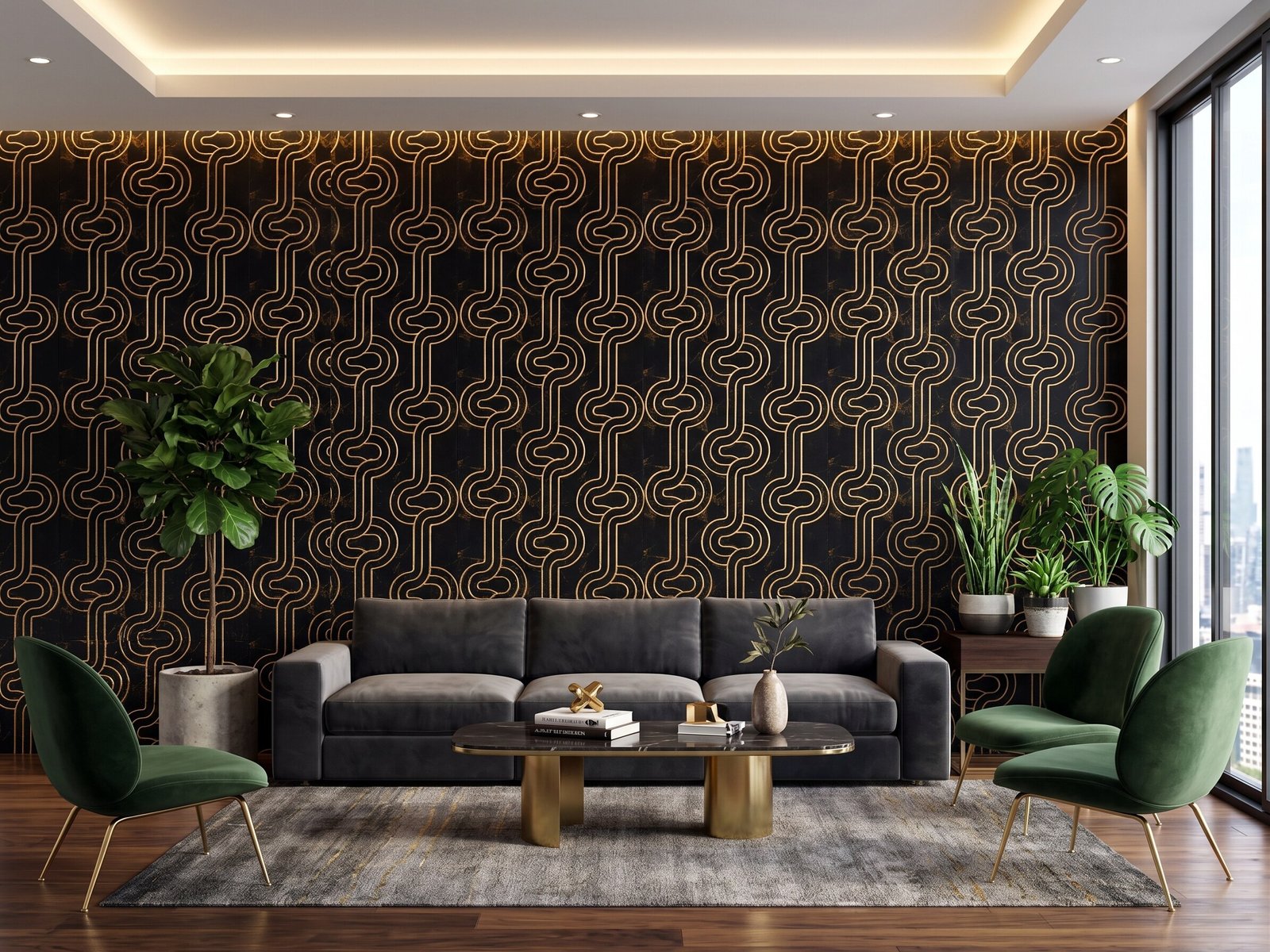
Room guide
Home office wall panels have become one of the most requested jobs in Karachi since remote work and video calls became normal. The wall behind your desk is now the wall your colleagues, clients and students see every day, and a plain painted wall with a visible cable does not say what a slat panel or a marble sheet says.
Shop slat panelsThis guide covers the video-call background, the rest of the home office, and the practical side: cable routes, monitor arms, shelving, acoustics and lighting. It applies to a dedicated study, a corner of a bedroom or the end of a lounge, which is where most Pakistani home offices actually sit.
The video-call wall comes first
Sit in your chair, open your camera and look at what fills the frame. That wall, or the part of it the camera sees, is where home office wall panels earn their money. Everything else is secondary.
- Keep it simple. One textured finish across the frame reads as professional. Busy shelves, mixed finishes and a half-panelled wall look cluttered on camera.
- Mid tones photograph best. Natural oak, ash grey and walnut show texture without bouncing light onto your face or turning black on a webcam. Very dark finishes can look flat on camera and very light ones can wash out.
- Vertical lines suit the frame. Slats or round slats give depth on a webcam. A flat panel reads as a calm wood wall and is also good.
- Fill the frame. Make sure the panelled area extends beyond what the camera sees on both sides and above your head, so no edge shows.
Slat panels in natural oak or ash grey are the most common choice for this wall. For a quieter look, see flat wood grain WPC wall panels in Karachi.
Lighting for the camera and the panels
A webcam needs light on your face, not behind you. A lit panel wall behind you is fine as long as a lamp or window lights you from the front. A soft warm LED strip above the panels adds depth to the background without silhouetting you. Avoid a bright window behind the desk, which turns you into a shadow. Because a home office light runs all day, efficiency matters: the US Department of Energy notes that LEDs use up to 90 percent less energy than incandescent bulbs, and a strip on the UPS circuit keeps your background lit when the power goes.
Cables, monitor arms and shelves
A home office has more cables than any other room in the house, and they all want to run up the wall behind the desk: monitors, chargers, a router, a lamp, a printer. Panels fitted on battens give a route for all of them.
- Plan every socket at desk height and above, including a USB socket, before panels go up.
- Run conduit behind the panels on battens so monitor and router cables disappear.
- Fix monitor arms and shelves into battens or masonry, never into the panel alone. Most monitors follow the VESA mounting standard, so check your screen’s hole pattern and weight before buying an arm, and mark the arm position on the wall before fitting panels.
- Leave an access point near the router so cables can be changed later.
- Use a cable tray under the desk for anything that cannot go behind the wall.
Noise and concentration
Home offices in Karachi share walls with living rooms, kitchens and the street. Slat panels break up the flat surfaces that make a small room echo, so calls sound clearer and the room feels calmer. They are not soundproofing and will not block traffic noise or a television next door. For that, add a rug, curtains and a solid door, and consider acoustic panels designed for the job.
Home office wall panels in a bedroom or lounge
Most Pakistani home offices are a desk in another room. Panels can define the work zone without a partition.
- Desk in a bedroom. Panel the wall behind the desk in a finish that matches the bed wall tone, or keep the bed wall plain and let the desk wall be the feature. Light finishes keep a shared room calm.
- Desk at the end of a lounge. A panelled alcove or a band the width of the desk marks the office. Match the tone to the TV wall.
- Desk under a window. Avoid the window behind you on camera. Turn the desk so a side wall becomes the background and panel that.
Humidity, AC and the office wall
Home offices run the AC all day in summer and often sit on an external wall. Keep panels out of direct AC airflow and away from the drain pipe, check the wall for damp before fitting, and keep the UPS and router ventilated rather than boxed in behind panels. Our office wall panels guide covers commercial offices in more detail.
Choosing a finish for home office wall panels
Finish matters more on camera than in the room. Webcams compress contrast and shift colour, so a wall that looks subtle in person can look flat or muddy on a call.
- Natural oak and ash grey are the safest. They show texture on camera without pulling attention from your face.
- Walnut and coffee tones look warm and professional, especially with a warm white strip above.
- Espresso and black work in a large, well-lit office and make a strong statement, but in a small room with one window they can swallow the light and look like a dark void on camera.
- White and very light finishes can wash out and cause the camera to darken your face.
- Marble sheets look premium but reflect ring lights and windows. Use a matte wood profile if glare is a problem.
Test it the simple way before you order a single panel: hold a sample behind you, open the camera and look at the screen in your usual working light. Home office wall panels are chosen for the person on the other end of the call as much as for you.
Frequently Asked Questions
Which home office wall panels look best on video calls?
Mid-tone slat or round slat panels in natural oak, ash grey or walnut, lit softly from above, with a lamp or window lighting your face from the front.
Can I hide my monitor and router cables behind panels?
Yes, if the panels are fitted on battens. Run conduit behind them, plan sockets at desk height and leave an access point near the router.
Can I fix a monitor arm to a panelled wall?
Yes, through the panel into a batten or masonry. Check your monitor’s VESA pattern and weight, and mark the arm position before the panels go up.
Do wall panels reduce echo on calls?
Slat panels break up flat reflective surfaces and make a small room sound calmer. They do not block noise from other rooms or the street.
Which finish suits a desk in a shared bedroom?
Light tones such as natural oak or ash grey, matched to the bed wall tone, keep a shared room calm while still giving a professional background.
Should the panelled area be wider than the camera frame?
Yes. Extend the panels beyond the frame on both sides and above head height so no edge shows on camera.
