Room guide
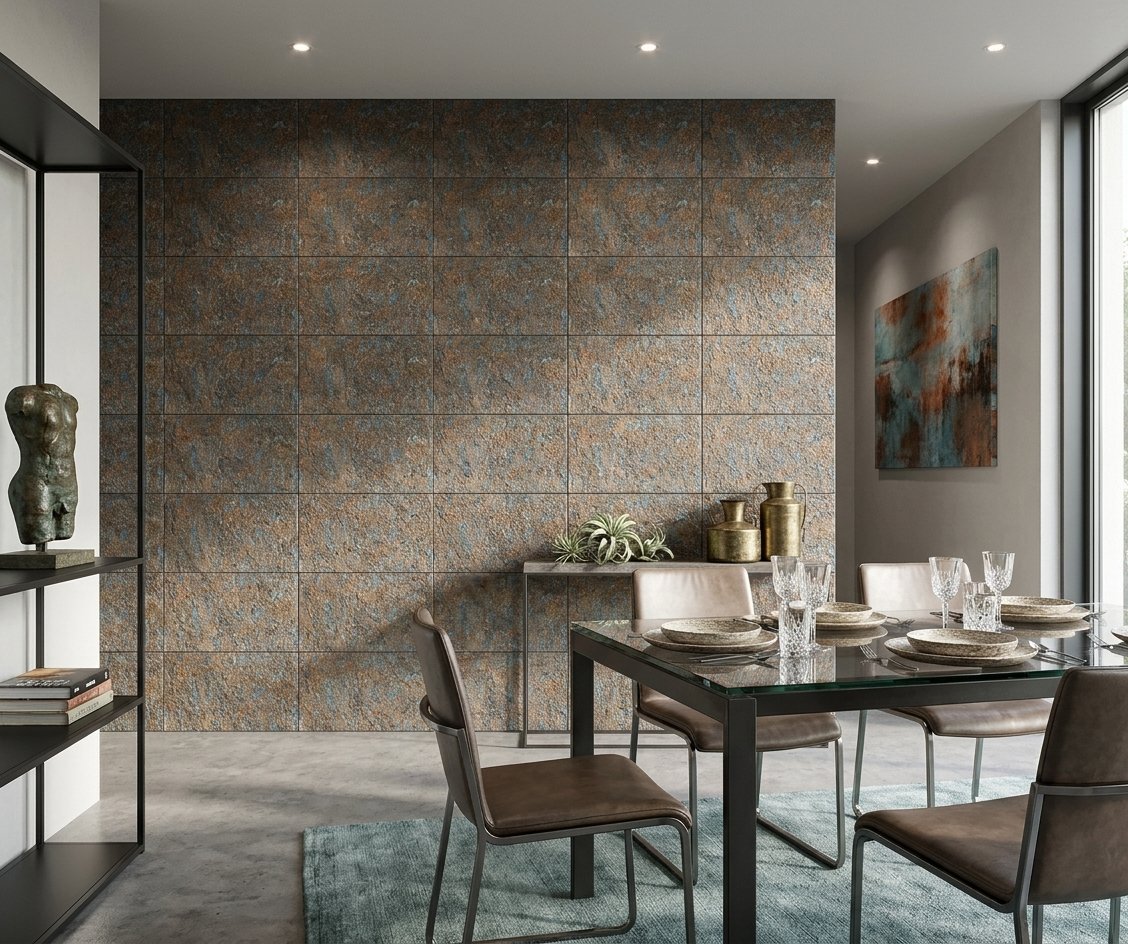
Dining room wall panels have to cope with more than any other feature wall in a home. Chair backs scrape them, curries and chai get splashed near them, and they are seen up close by every guest at the table. The right panel makes the dining area feel like a restaurant. The wrong one shows every mark within a month.
See UV marble sheetsThis guide explains which panels suit a dining room, where to put them, how to protect them from chairs, how to combine them with lighting and how to keep them clean. It applies to separate dining rooms and to the dining end of an open-plan lounge, which is how most Karachi apartments are laid out.
What dining room wall panels need to do
A dining wall has three jobs: look good from the table and from the lounge, survive daily contact, and wipe clean. That rules out wallpaper and soft finishes, and it narrows the panel choice to hard, smooth or shallow-profile surfaces.
- Behind the chairs. The wall closest to the table takes knocks from chair backs. It needs a hard, flat or shallow profile and a protective rail at chair height.
- The feature wall. Usually the wall you see from the lounge or the entrance. It can take a deeper, more dramatic profile because nothing touches it.
- Near the kitchen pass or serving counter. Splashes and steam reach this wall, so it needs a wipeable, water-resistant surface.

Best panels for a dining room
UV marble sheets for the wall behind the table
A UV marble sheet is the best choice where food and chairs meet the wall. The glossy UV-cured surface wipes clean, and unlike real marble it does not etch when acidic food touches it. The US General Services Administration notes that acids such as vinegar, fruit juice and tomato products etch real marble, which is exactly what ends up on a dining wall. A printed, coated sheet avoids that. Our UV marble sheets Karachi page lists the 11 designs and the sheet size.
Round slat or flat panels where chairs touch
If you prefer wood, choose round slat panels or flat wood grain panels behind the chairs. Rounded ribs have no sharp edges to chip, and a flat face wipes in one pass. Add a timber or WPC rail at chair-back height, or keep the table far enough from the wall that chairs do not reach it.
Deep slats for the feature wall
On the wall nothing touches, 24mm fluted panels in walnut or black with a warm LED strip above give the dining room its restaurant feel. Deep shadows and evening light suit a room used mostly at night.
Protecting dining room wall panels from chairs
- Measure the chair-back height and mark it on the wall before fitting.
- Fit a rail or trim at that height, or choose a flat or round slat profile that takes a knock without chipping.
- Leave a gap. Position the table so pushed-back chairs stop short of the wall.
- Use felt or rubber pads on chair backs if they will touch the panels.
- Keep a spare panel from the same batch so a damaged section can be swapped.
Lighting the dining wall
Dining rooms are used at night, so lighting decides how the panels look. A pendant over the table lights the food, not the wall, so add a concealed LED strip above the panels or a pair of wall lights to wash the surface. Warm white suits wood and gold. Neutral white suits grey and white marble. Choose a dimmable strip so the room can go soft for long dinners. Plan cables before fitting.
Open-plan dining in Karachi apartments
Most newer apartments in Karachi combine lounge and dining in one room. Dining room wall panels can define the dining zone without a partition. Panel the wall behind the table in a finish that contrasts gently with the lounge wall, keep the two in the same tone family, and let a pendant light mark the dining area. A UV marble dining wall beside a wood-slat TV wall is a combination that works well.
Cleaning and humidity
Wipe splashes the same day with a soft cloth, water and a drop of mild soap. Avoid scouring pads and strong chemicals on both marble sheets and WPC panels. Dust grooves weekly with a soft brush. If the dining wall backs onto the kitchen or an external wall, check for damp before panelling. The US Environmental Protection Agency puts it plainly: the key to mould control is moisture control, so fix any seepage first. Our wall panels Karachi guide covers local conditions.
When to choose something else
- A wall directly behind a cooking range in an open kitchen. Use tiles.
- A wall with active seepage. Repair first.
- A rented flat where you cannot glue. Use panels on battens or a removable sticker.
Choosing a finish for dining room wall panels
Dining rooms are used mostly in the evening, under warm light, with a wooden table in front of the wall. That narrows the choice of finish more than in any other room.
- Match the table, do not copy it. A walnut table against walnut panels disappears. Go one or two steps lighter or darker, or switch material: wood table against marble sheet, glass table against wood slats.
- Dark finishes for evening drama. Espresso, dark walnut or black panels and black or gold-veined marble make a dining room feel intimate under pendant light. They suit rooms used for dinners and guests.
- Light finishes for daytime dining. A breakfast area or a family dining room used at lunch suits ivory marble, natural oak or ash grey, which keep the space bright.
- Gold for formal rooms. Gold-veined marble or a gold foil accent above a sideboard suits a formal dining room with brass lighting.
- Check under your own pendant. Warm bulbs push wood towards orange. Hold a sample under the dining light at night before you decide.
Dining room wall panels are seen close up by seated guests for an hour or more, so a realistic grain or vein matters more here than on a wall seen from a doorway. Choose a design with natural, irregular pattern rather than a tight repeat.
Frequently Asked Questions
Which wall panels are best for a dining room?
UV marble sheets behind the table, because they wipe clean and do not etch from food acids, and round slat or flat WPC panels where chairs touch the wall. Deep slats suit the feature wall nothing touches.
Will chairs damage dining room wall panels?
They can scuff deep grooves. Choose a flat or round slat profile behind chairs, fit a rail at chair-back height and keep the table a little away from the wall.
Can food stains be cleaned off UV marble sheets?
Yes. Wipe with a soft damp cloth and mild soap the same day. The coated surface does not absorb or etch like real marble.
How do I separate dining and lounge zones in one room?
Panel the dining wall in a finish that contrasts gently with the lounge wall, keep both in one tone family and mark the table with a pendant light.
Which lighting suits a dining wall?
A concealed warm white LED strip above the panels or wall lights either side, dimmable for evening meals. The pendant over the table lights the food, not the wall.
How many UV sheets does a dining wall need?
Divide the wall area by the sheet area on the product page and round up, allowing one extra if you want the veins to flow across joints. Most dining walls need two or three sheets.
