Room guide
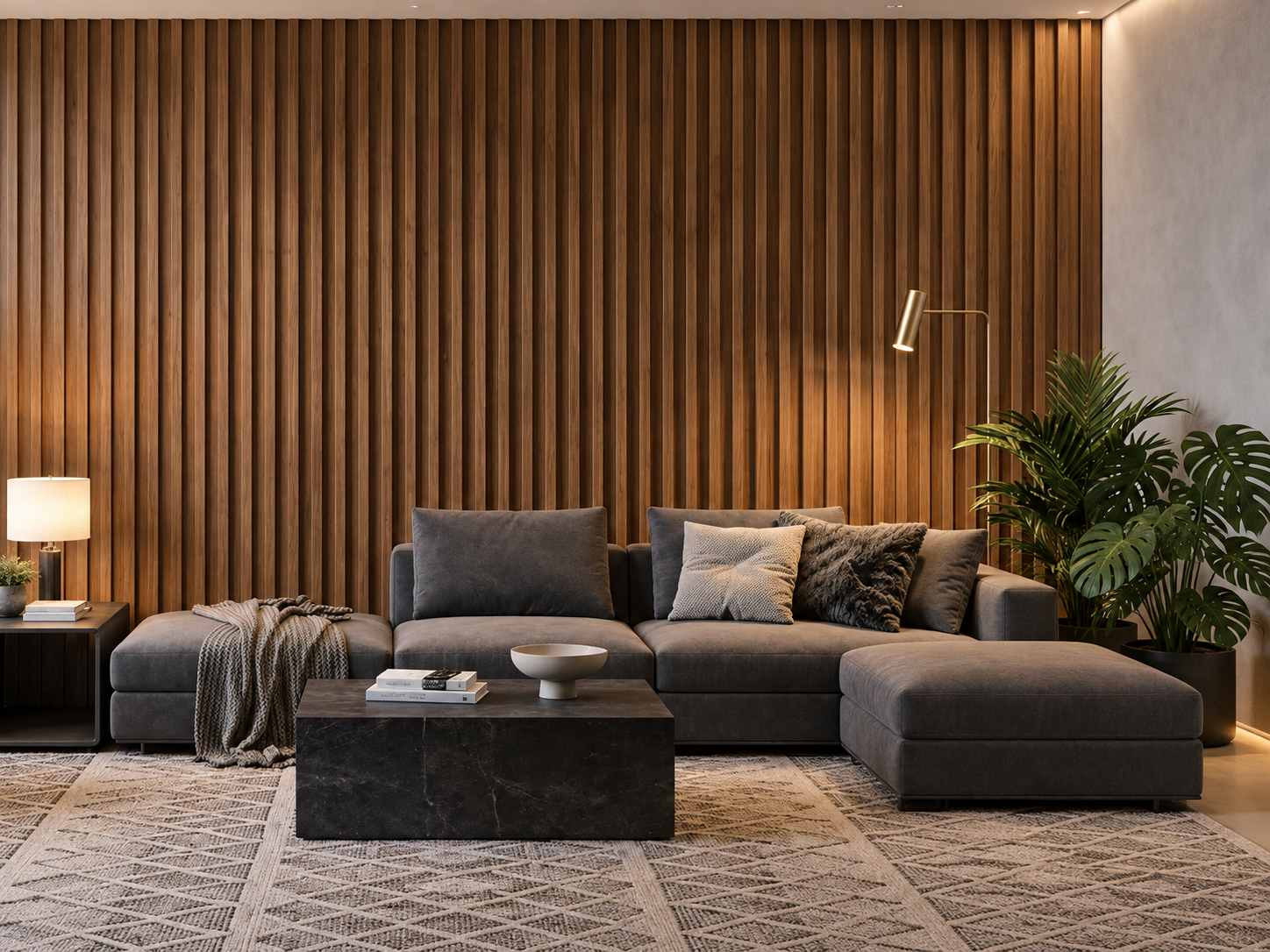
Drawing room wall panels do a job no other finish in the house has to do. The drawing room is where guests sit, where family photos are taken and where the furniture is the most formal, so its main wall carries more expectation than any other. Get it right and the whole room looks finished. Get it wrong and new sofas sit against a tired wall.
Browse WPC wall panelsThis guide covers the panel types that work in Pakistani drawing rooms, how to pick the wall, how to match finishes to your furniture, how to combine wood, marble and gold without overdoing it, and how to light the result. Every WPC panel from Sky Build Mart is 9.5 ft (2900 mm) long, so most drawing room walls are covered without a horizontal joint.
Which wall should carry the drawing room wall panels?
Pick the wall you face when you enter, or the wall behind the main sofa. One panelled wall with plain painted walls around it looks deliberate and expensive. Panelling every wall makes a formal room feel like a box.
- Behind the main sofa. The classic choice. Guests sit in front of it, and it frames every photograph taken in the room.
- The wall facing the door. The first thing a visitor sees. Good for rooms where the sofa sits against a window wall.
- The TV wall, if the drawing room has one. Many Karachi drawing rooms double as a lounge. A panelled TV wall hides cables and frames the screen.
- A chimney breast or alcove. Panelling a recess adds depth without covering a whole wall.
Avoid walls broken up by two doors or a large window, where the panels will be cut into awkward strips.
Three looks that work in Pakistani drawing rooms
Warm wood slats
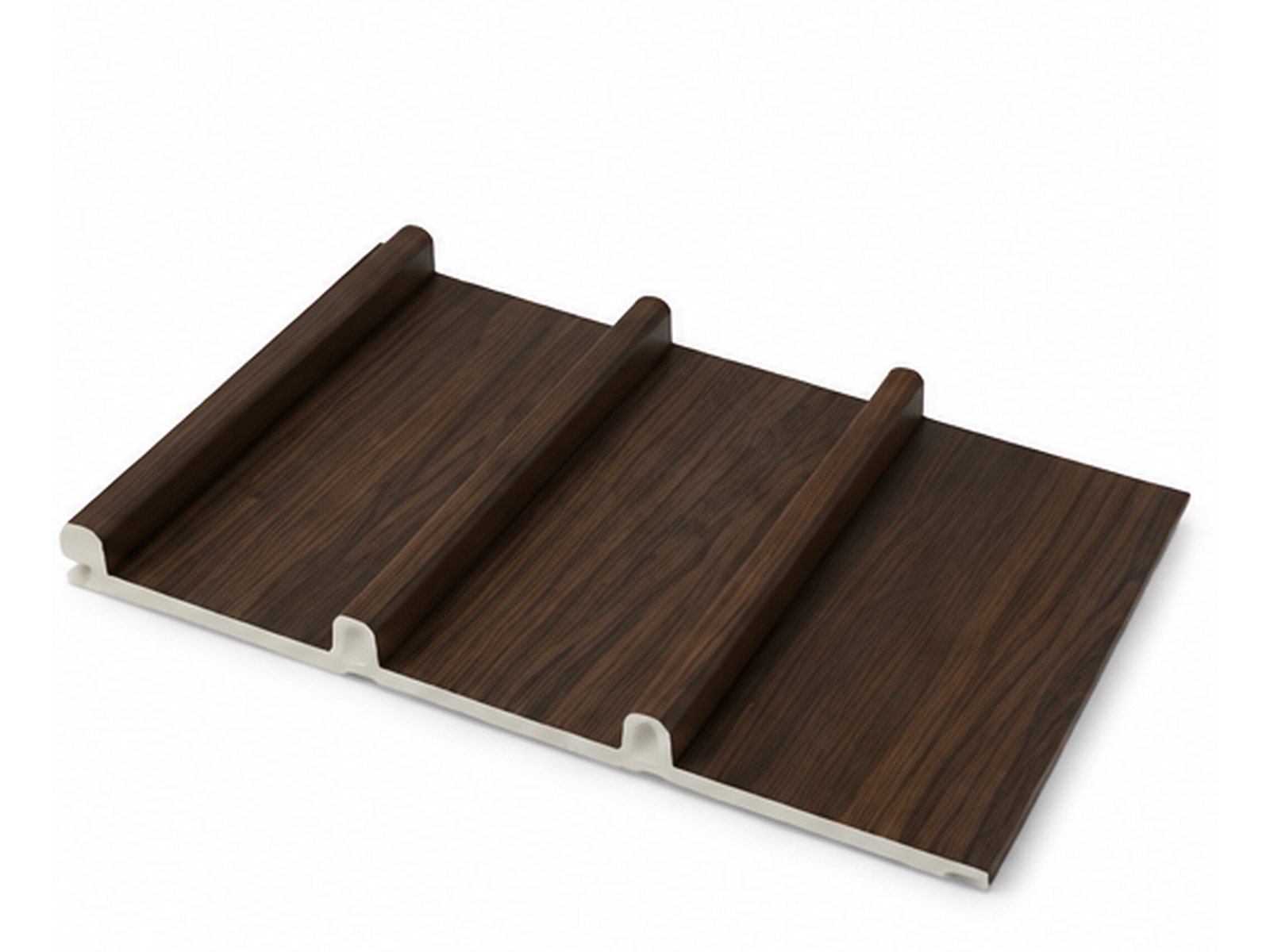
Vertical slats in walnut, oak or cedar are the most popular drawing room wall panels in Karachi right now. They suit traditional carved sofas as well as modern low seating, and under a warm LED strip the grooves cast long shadows that photograph beautifully. Choose 24mm WPC wall panels for a large formal room and 17mm or round slat for a smaller one.
Polished marble
For a formal, glossy look, a UV marble sheet in ivory, gold-veined black or soft grey gives the drawing room the feel of a hotel lobby. Sheets are large, so a typical wall needs only two or three, with very few joints. See the designs on our UV marble sheets Karachi page.
Wood and gold together
A gold foil feature panel framed by wood slats either side is the layout we are asked for most often for drawing rooms. The gold catches lamplight in the evening and the wood keeps it from looking cold. Our golden foil wall stickers page shows the designs.
Matching panels to your furniture
The drawing room is usually the room with the most expensive furniture, so the wall should serve the furniture, not compete with it.
- Carved wooden sofas and traditional sets. Mid wood tones such as walnut or honey cedar, or cream marble. Avoid very dark black panels, which fight with dark carved wood.
- Light fabric sofas in cream, beige or grey. Almost anything works. Dark walnut or black slats give contrast, and gold-veined marble adds glamour.
- Velvet sofas in jewel colours. Keep the wall quiet. Flat wood grain or a soft grey marble lets the fabric be the colour in the room.
- Modern low sofas and glass tables. Slats in oak or ash grey, or a white marble sheet, suit the clean lines.
Look at samples next to the actual sofa in daylight and under your evening lamps. Phone photos and screens shift wood tones and gold.
Lighting the drawing room wall
Drawing rooms are used most in the evening, so plan the lighting with the panels. A warm white LED strip concealed above the wall washes down the slats or marble and makes the whole room feel softer. Wall sconces either side of a sofa do the same job for a smaller wall. LEDs cost very little to run: the US Department of Energy notes that LEDs use up to 90 percent less energy than incandescent bulbs, so many families keep the feature lighting on the UPS circuit for load shedding.
Run cables before the panels go up. Moving a socket or adding a strip after the wall is finished means cutting panels.
Karachi humidity and the drawing room
Drawing rooms often sit on an external wall, and many are closed up for days between visitors with the AC off. Karachi humidity stays high for much of the year, with humid conditions from roughly March to November, so a closed room can hold damp air for weeks. WPC panels and UV sheets cope with humid air far better than wallpaper or MDF, but the wall behind them must be dry. Check for salt marks, bubbling paint or stains after rain before you panel, and fix any seepage first. Our wall panels Karachi guide covers local conditions in detail.
How many drawing room wall panels do you need?
- Measure the wall width at three heights and use the largest figure.
- Divide by the cover width on the product page and round up.
- Add 5 to 10 percent for cutting and keep one spare from the same batch.
- If the ceiling is higher than 9.5 ft, decide where the panels stop and finish the top with a trim or lit ledge.
- Order trims and end caps with the panels.
Mistakes that spoil a drawing room wall
- Panelling all four walls. One feature wall is enough.
- Three competing finishes. Use one main material and one accent.
- Choosing from a phone screen. See the finish beside your sofa.
- Forgetting the lighting until after the panels are fitted.
- Covering damp instead of fixing it.
Drawing room wall panels for small and large rooms
The size of the drawing room changes the right choice more than the budget does. In a compact apartment drawing room of around 12 by 14 ft, deep 24mm fluting across the whole wall can feel heavy, and a dark marble sheet can shrink the room further. Choose a slim profile such as 17mm or round slat in a mid or light tone, panel the sofa wall only, and light it from above so the wall appears to recede. A centred band the width of the sofa with painted wall either side also works well and uses fewer panels.
In a large bungalow drawing room with a high ceiling, the opposite applies. Slim panels and light tones can look thin from across the room. Here 24mm fluting in walnut or a gold-veined marble sheet holds the space, and a lit ledge at 9.5 ft gives a natural stopping point below a tall ceiling. Wrap any columns in curved panels so the room reads as one design, and consider panelling a second, smaller wall such as an alcove or chimney breast in the same finish to balance the main wall.
Whatever the size, drawing room wall panels look best when the furniture is arranged to face them. Move the sofa before you measure, not after the panels go up.
Frequently Asked Questions
Which wall panels are best for a drawing room?
Warm wood slats for most rooms, UV marble sheets for a formal glossy look, and a gold foil centrepiece framed by wood for the most popular combination. Match the tone to your sofa and lighting.
Should I panel the whole drawing room?
No. One panelled wall, usually behind the main sofa or facing the door, with plain walls around it looks far more deliberate than panels on every wall.
Which colour suits a traditional carved sofa set?
Mid wood tones such as walnut or cedar, or cream marble. Avoid very dark panels behind dark carved wood, because the two fight each other.
Do drawing room wall panels work in a small room?
Yes, if you choose a light finish and a slim profile such as 17mm or round slat, and panel only one wall. Light the wall from above to add height.
How long does fitting take?
A skilled installer finishes a typical drawing room feature wall in about a day, longer if battens, wiring and LED lighting are added.
Can I combine marble and wood on one wall?
Yes. A marble or gold foil centre with wood slats either side is a popular drawing room layout. Keep the wood to one tone and let the centre be the accent.
